
| Mon - Thur 8:30 am - 5:00pm, Friday 8:30 am - 4:00 pm
| Government of Jamaica ja-flag

Ministry of
Economic Growth
& Infrastructure Development

Author: Stephon.johnson@megjc.gov.jm

National School Tree Planting Competition launched by Minister Samuda

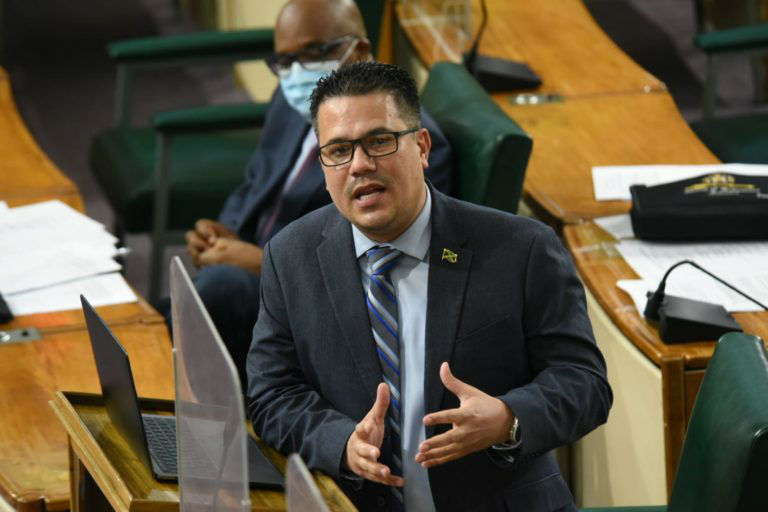
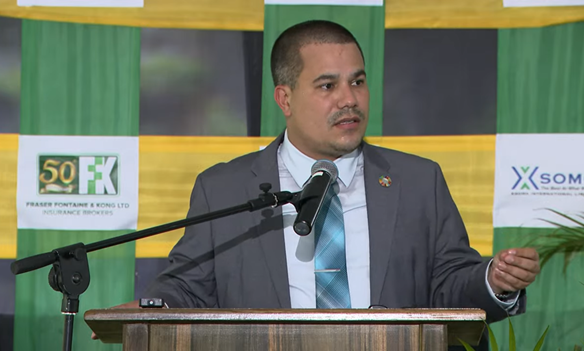
Minister without Portfolio in the Ministry of Economic Growth and Job Creation, Sen. Hon. Matthew Samuda, today launched the National School Tree Planting Competition at the Forestry Department’s Constant Spring Road offices.

Addressing the participants at the event, Minister Samuda said the launch of the competition is a particularly important investment for our youth.

“This is an excellent initiative that acknowledges and recognizes the important role our schools have, in making sure that our children are not just highly educated, but highly conscious of the role that they have within our society, within our country and certainly within our world. Jamaicans are a highly competitive people and I stand firmly behind the belief that one of the ways that we are going to recruit Jamaicans to environmental action is through getting their competitive spirit going” Minister Samuda stated.

The Minister further noted that this latest activity by the Agency is intended to provide more support to the National Tree Planting Initiative that was launched by Prime Minister, the Most Hon. Andrew Holness in 2019.

“It is our intention that we hit the three million tree target before the 60th anniversary of the nation is up.  We can then recraft a new one”, he said, adding that “getting schools active and competitive on it, will indeed help us to meet our target”.

Minister Samuda also called for private sector groupings to increase their environmental stewardship through similar competitive means.

“We would love to see that when they have these lovely galas at the end of the year and they acknowledge best corporate citizen, and best in class, that there is an award from all the private sector groupings for those who have done the most for the environment within their space and I can think of no better initiative over the next 12 months than to evaluate that work in the environment by how many trees they have planted”.

The National School Tree Planting Competition will be open to schools at the early childhood, primary and secondary levels and tertiary level students. The schools or student that propagates and plants the most fruit and ornamental trees will win the competition.

Winning schools or students will earn cash prizes valued at $50,000 to $300,000 in the following categories:

  1. Most Trees Planted
  2. Most Innovative School
  3. Most Outstanding Student
  4. Most Outstanding Teacher
  5. Most Outstanding Student of Agricultural Institution

The NTPI with a timeline of three million trees in three years, recognizes that the health, economic and social well-being of Jamaicans is directly linked to the state of the country’s natural resources and the environmental quality.

Trees planted and maintained must be submitted to the Forestry Department via the 876trees mobile app (Forestry Department’s Tree Tracker mobile application) to be counted at the end of the competition, or via a completed log emailed to fdinfo@forestry.gov.jm by February 28, 2023.

The official awards ceremony will be held on International Day of Forests, Tuesday, March 21, 2023.


                                     -30-

Government On a Mission to Ensure Proper Shelter for All Jamaicans

Prime Minister Andrew Holness says the Government has been moving at a rapid and efficient pace to ensure more Jamaicans benefit from proper shelter through the New Social Housing Programme (NSHP).

The Prime Minister stated that with the implementation of an improved process and system, more persons will benefit from the NSHP. He further stated that there will be macro and micro impact stemming from the programme.

Prime Minister Holness said: “The technology exists to build a house in just one week. Once we refine it to that level of precision, science and engineering then we will be able to increase the pace at which we transform our society.”

In the meantime, the Prime Minister underscored that the NSHP is about giving hope to others and ensuring that the society is rid of pessimism and despair.

“If people don’t have hope then despair will set in. If people don’t have hope then they will take a pessimistic view of the future and if people don’t have hope then they will not be reasonable.”

Furthermore, the Prime Minister stated that the programme will also help to break intergenerational poverty and give future generations a positive outlook.

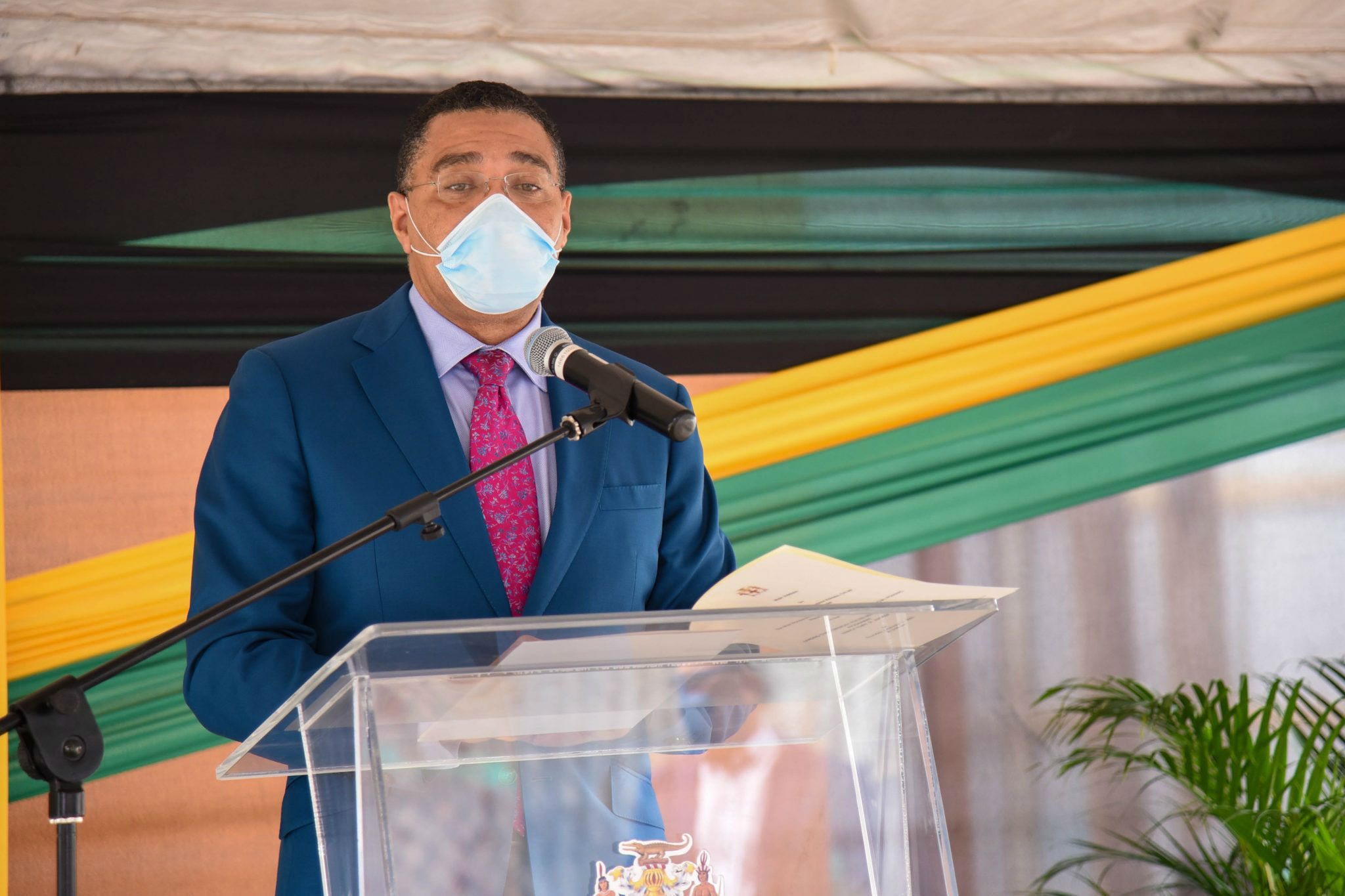
The Prime Minister was speaking yesterday (June 17, 2022) at the handing over ceremony of a new social housing unit in Wakefield District, Trelawny.

The recipient, Ms Brenda Grant, received a brand new three bedroom house through the NSHP. So far, the Government has handed over 73 units under this programme, with the aim of reaching 100 by August.

                                                            –30–

Jamaican Architects Encouraged to Submit Designs for Low Cost Housing Competition

Jamaican Architects Encouraged to Submit Designs for Low Cost Housing Competition

WRITTEN BY: AINSWORTH MORRIS – JAMAICA INFORMATION SERVICE

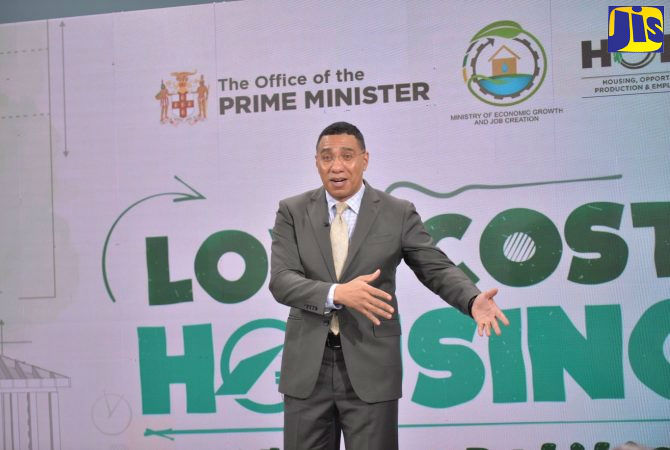
The Government is calling on Jamaican architects to submit creative, original, resilient and low-cost housing designs, through the Low Cost Housing Design Competition, which can be used as a model for the nation’s social housing programme.

The competition was launched virtually on Friday (May 7) by Prime Minister, the Most Hon. Andrew Holness.
It forms part of the social housing aspect of the Housing, Opportunity, Production and Employment (HOPE) programme.

“The genesis of this project was indeed the success of the competition that was launched for the design of our [new] Parliament [building],” the Prime Minister said.
“What we are trying to do is to get the architectural community, the planning community, and the environmental community to take the vast knowledge that exists, both globally and of local circumstance, and infuse it into practice to solve real world problems,” he added.

The Prime Minister said solutions that do not win will help the Government with having knowledge of solutions that are there from research and academia.
“The Government will take that application and put it through our bureaucracy and then have it implemented,” Mr. Holness said.

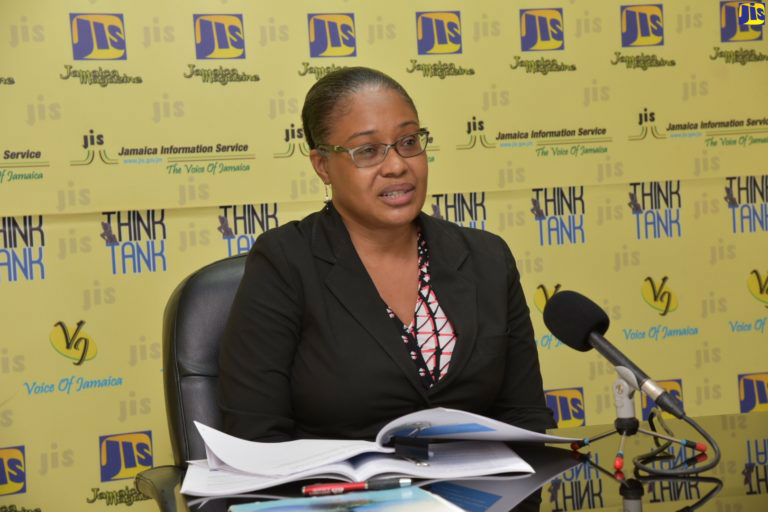
Permanent Secretary, Ministry of Economic Growth and Job Creation, Audrey Sewell, gave an overview of the competition and its requirement.
“Given the high demand, there is need to optimise our limited financial resources to get the best value at the least cost. It is against this background that at the inception of the programme, the Prime Minister gave the directive for the Low Cost Housing Competition to be launched,” Mrs. Sewell said.

“It is open to all Jamaicans, whether they live here or overseas. Of course, those who are residing overseas will have to prove that they are Jamaicans. We are especially targeting engineers, architects, builders and students from the built environment, but we are not limiting the competition to those categories, so once you feel that you meet the requirements, we are encouraging you to enter,” she added.

Submissions may be done individually or in teams with a maximum of five persons. Competitors are encouraged to conceive new and original design concepts that are low cost and sustainable.
Designs should accommodate persons who are disabled, should demonstrate climate resilience and be adaptable to the various terrains to be found islandwide.

Entries will be accepted in four categories: one, two and three bedroom units and multi-family unit.
The Government will offer a prize of $1 million for the winner, $500,000 for the second place, and $250,000 for the third place in each of the four categories.

The planet’s environmental crisis can only be addressed with Unity of purpose and collective bold action – Samuda

The planet’s environmental crisis can only be addressed with Unity of purpose and collective bold action – Samuda

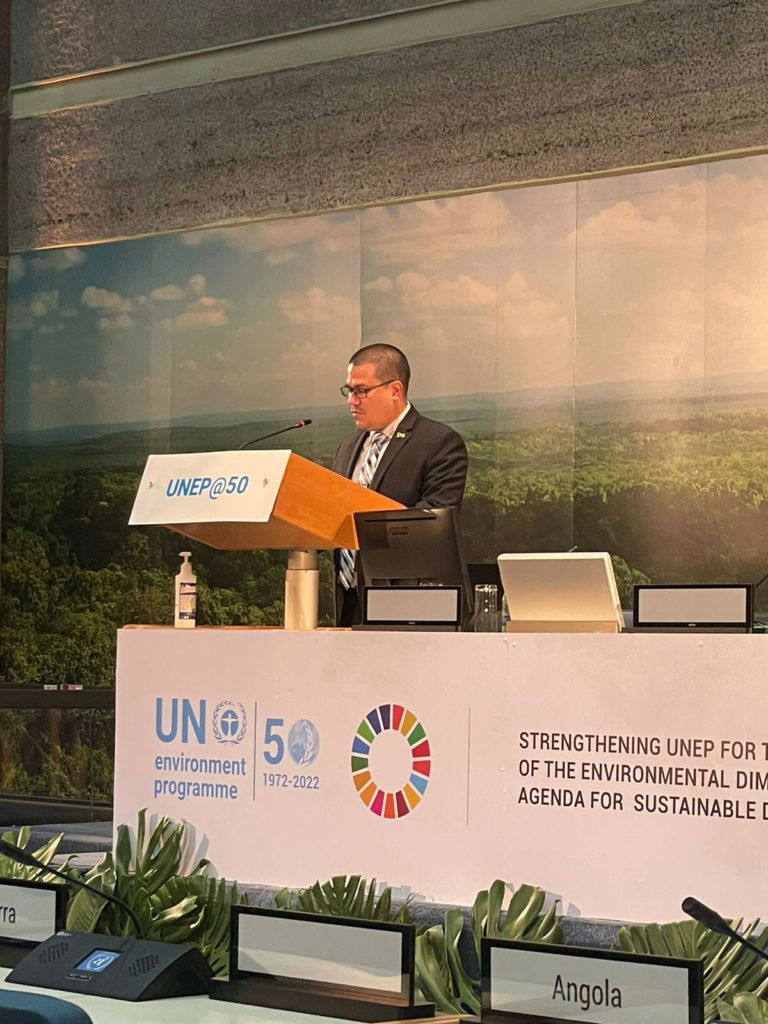
Minister without Portfolio in the Ministry of Economic Growth and Job Creation Senator the Honourable Matthew Samuda has stated that triple planetary crisis of climate change, nature and biodiversity loss, and pollution can only be addressed with unity of purpose and collective bold action.

As such, Minister Samuda noted that the United Nations Environment Programme (UNEP) is uniquely positioned and has a crucial role to play to reinvigorate international cooperation and spur collective action.

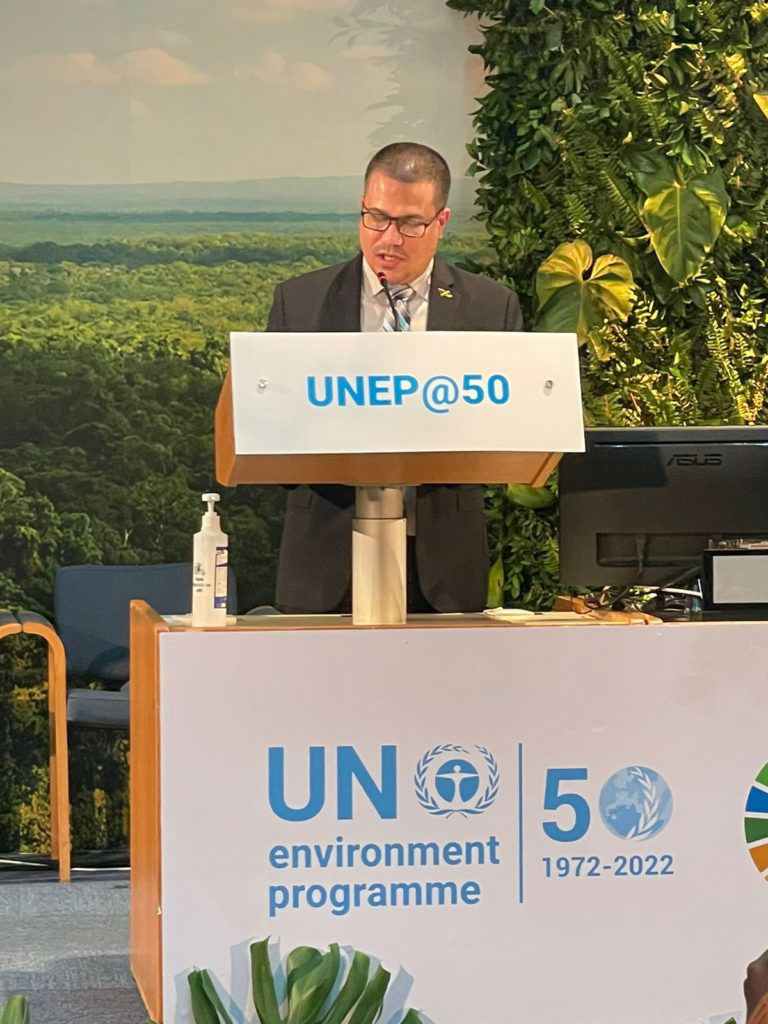
Minister Samuda, was addressing representatives of Member States of the United Nations Environment Programme (UNEP) in Nairobi, Kenya on Friday March 4, 2022 during the special session to commemorate the 50th anniversary of that body’s creation (UNEP@50).

In extending congratulations to UNEP on behalf of the Government and people of Jamaica, the Minister lauded its efforts as “the major pillar of the UN Multilateral System’s case for society in harmony with nature”, adding that it has co-ordinated the worldwide effort to confront the planet’s biggest environmental challenges.

“For 50 years, UNEP has provided the necessary science-policy interface to allow for interdisciplinary exchanges, with the ultimate objective of enhancing decision-making on the global environment agenda” the Minister said, adding that there have been significant successes.

However, he argued that there have also been a number of critical targets that have been missed, that the global community had previously committed to, and suggested three (3) crucial actions as part of the process of transformation and renewal for the next 50 years.

“Firstly, there must be all inclusive representation, including strong engagement from highly vulnerable  economies.  Engagement processes, particularly at the national and local levels, have proven to be inadequate to meet the goals originally established for the organization. Secondly, there is need to simplify funding mechanisms that target scaled- up interventions at the regional and sub-regional levels.     This modality requires the strengthening of existing regional coordinating bodies such as the UNEP Sub-regional office for the Caribbean; and the UNEP Caribbean Environment Programmes Regional Coordination Unit (CAR RCU), Secretariat to the Cartagena Convention.

“Jamaica hosts both entities which have played a significant role in regional environmental governance,  but could be more rigorous in effecting change at the policy level”, the Minister noted.

The third point put forward by Minister Samuda was what he termed “strong evidence” pointing to a gap between policy acceptance and implementation at the national, regional and international levels.

“The strategic approach must therefore be focused on how the Science-Policy Interfaces can be more solution-driven, implementable and equitable”, he added.

Minister Samuda invited the international community to continue its support to UNEP, beyond this golden jubilee year.

The NDC Partnership Launches Its Finance Strategy Stepping Up Finance for Climate Action

The NDC Partnership Launches Its Finance Strategy Stepping Up Finance for Climate Action

The Prime Minister of Jamaica together with NDC Partnership leadership announces the launch of its Finance Strategy to mobilize finance for NDC action

MONTEGO BAY, JAMAICA – 4 April 2022 – The Prime Minister of Jamaica Andrew Holness will launch the NDC Partnership’s Finance Strategy on Wednesday, 6 April, together with NDC Partnership Co-Chairs, Senator the Honorable Matthew Samuda of Jamaica, Minister without Portfolio in the Ministry of Economic Growth and Job Creation, and The Right Honorable Alok Sharma of the United Kingdom, Member of Parliament and COP President. The announcement signals that the leadership of the NDC Partnership, member countries and international partners stand committed to mobilize finance at scale for climate and development action as never before.

Jamaica, along with the United Kingdom, is a Co-Chair of the NDC Partnership, a country-driven and member-led global coalition that brings together more than 200 members, including more than 115 countries, developed and developing, and more than 80 institutions, to create and deliver ambitious Nationally Determined Contributions (NDCs) that help achieve the Paris Agreement and the Sustainable Development Goals (SDGs).

In five years, the Partnership has mobilized around USD1 billion to support developing countries with climate action, but much more is needed to finance the economy-wide transitions that countries are working towards. The Finance Strategy demonstrates how the NDC Partnership will accelerate access to urgently needed climate finance for developing countries to achieve the goals of the Paris Agreement by:

  • Supporting the development of regulatory frameworks to attract domestic and international investment, including through central banks,
  • Integrating climate plans into national budgets and post COVID-19 economic recovery plans, and,
  • Identifying and developing bankable projects with member and private sector investment.


During the first enhancement cycle of the Paris Agreement, most developing countries brought forward more ambitious climate commitments. Following COP26 in Glasgow, countries are now turning their attention towards implementation. Yet, implementing climate commitments requires the mobilization of finance at a scale yet unseen. In its World Energy Transition Outlook, NDC Partnership Member, the International Renewable Energy Agency estimates that USD51 trillion will be needed in cumulative energy investments between 2021 and 2030 alone to achieve the 1.5°C scenario.

“Developing countries have shown that we are ready to take ambitious action to limit emissions and protect our people from climate impacts. But delivering on that commitment will mean unlocking finance faster and at greater scale than ever before,” said Prime Minister Holness. “Working with the NDC Partnership, Jamaica has developed a framework for action that will bring benefits both to our people and to the global fight against climate change. This is the time to bring international finance to bear.”

Added Senator Samuda: “Jamaica has elaborated a well-defined NDC Partnership Plan with bold and ambitious actions and we invite our partners to meaningfully coalesce their support and financing around this plan so that we can march forward together towards 2050”.

About the NDC Partnership

The NDC Partnership brings together more than 200 members, including more than 115 countries, developed and developing, and more than 80 institutions to create and deliver on ambitious climate action that help achieve the Paris Agreement and the Sustainable Development Goals (SDGs). Governments identify their NDC implementation priorities and the type of support that is needed to translate them into actionable policies and programs. Based on these requests, the membership offers a tailored package of expertise, technical assistance, and funding. This collaborative response provides developing countries with efficient access to a wide range of resources to adapt to and mitigate climate change and foster more equitable and sustainable development.

Jamaica’s prosperity paradox can only be solved by protecting its natural assets – Samuda

Jamaica’s prosperity paradox can only be solved by protecting its natural assets – Samuda

Senator the Hon. Matthew Samuda, Minister without Portfolio in the Ministry of Economic Growth and Job Creation, has stated that the prosperity paradox which has faced Jamaica for the better part of 50 years can only truly be solved by ensuring the appropriate use, management and protection of the island’s Natural Assets.

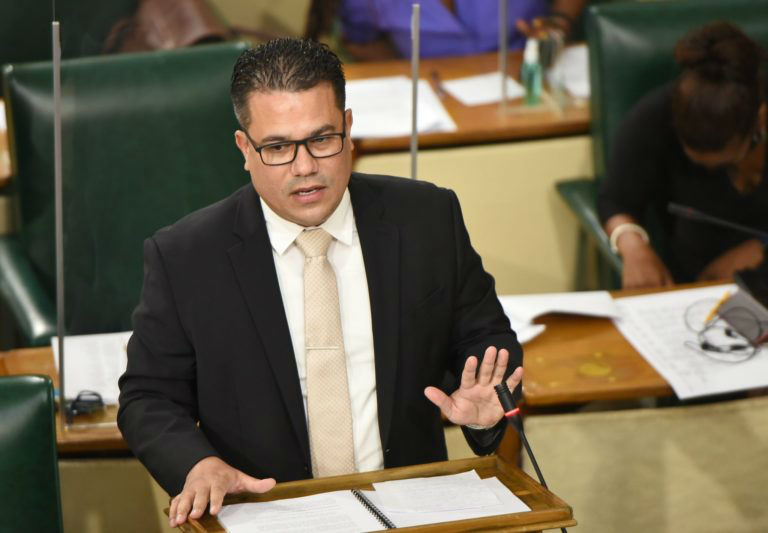
Making his contribution to the Debate on the Appropriations Act in the Senate recently, Minister Samuda highlighted some of the work being done in the Environment Portfolio and shared plans for the upcoming fiscal year, among them Jamaica’s membership in the thirty by thirty (30×30) Coalition.

“This means that Jamaica is actively pursuing both the protection of 30% of its landmass and 30% of its fresh and sea water (within its EEZ) by 2030. This work is being undertaken by the teams at NEPA, and the Forestry Department while being coordinated by the Environment team at MEGJC. These targets reflect Jamaica’s articulated ambition to double the targets currently agreed on by UNEP of 15%”, Minister Samuda shared.

Minister Samuda added that the Convention on Biological Diversity, to which Jamaica is a party, defines a protected area as ‘a clearly defined geographical space, recognized, dedicated and managed through legal or other effective means, to achieve the long-term conservation of nature with associated ecosystem services and cultural values.’

In furtherance of this, the Minister noted, two major achievements of the Government over the last fiscal year were the Black River Protected Area in St. Elizabeth, which he noted will preserve the natural and cultural heritage of the area including swamp forest, mangroves, beaches and coral reefs, which support wildlife and sustainable livelihoods.

The second area he mentioned, was the completion of the work to declare the Cockpit country a protected area.

“78,024 hectares are now protected. This represents the second largest protected area in Jamaica, and is approximately 3292 hectares larger than the announced 74,726 hectares which was announced in 2017.  Now that it has been declared, the CCPA is the island’s largest terrestrial protected area and overall, the second largest protected area after the Portland Bight Protected Area which is located in the south-central part of the island spanning 187,615 hectares of both terrestrial and marine areas.   We did not stop there. We have further included an additional 841 hectares of the “clawed back” area of mining lease within the boundary of the CCPA. That is how we have arrived at the final protected area of 78,024 hectares”, the Minister noted.

Minister Samuda also disclosed that with the assistance of the Global Environment Fund, work is advanced to invest US$49 million over the course of the next 5 years into the sustainable management of the protected area.

As the Government moves to actualize Jamaica’s 30 x 30 ambition over the next financial year, the Minister advised that one of the major areas of focus in the next financial year will be protection of the Pedro Cays and the surrounding waters, adding that work in this area is far advanced, and will result in the protection of some 88,200 hectares of land and sea.  He also disclosed that the Government will move to create a Designation under the NRCA act for “Ecologically Sensitive Areas”.

“This will provide a greater level of protection for areas with particular environmental sensitivities. The Government has already identified 16 such areas, 9 of which will be in the coastal zone. I think it useful to advise the Senate, and indeed the country that the first such area will be the Great Bay Area in South-West St Elizabeth. The Dry Harbour area will be another such area. This will mean that Activities such as mining will not be permissible”, he said.

Turning to plastic pollution, Minister Samuda noted that a resolution was passed recently in Nairobi, Kenya, by the UN Environment Assembly with 175 Nations supporting the establishment of an International Negotiating Committee to help develop a globally binding treaty on the issue.

“Mr. President, this treaty could have major implications to our manufacturing sector as it seeks to re-order our consumption patterns and change our management of plastic waste. As such, I’ve been directed to formally engage the Private Sector to ensure that they are properly advised and prepared for the changes to come” the Minister stated.

Minister Samuda added that in the interim, the Ministry of Economic Growth & Job Creation along with NEPA will take steps to maintain Jamaica’s leadership in this area.  This he said, includes a full review of the measures already in place; a recommittal to enforcement of these measures; a full review of the current recycling capacity in partnership with the NSWMA with the aim of moving plastic recycling targets to 50% of monthly consumption, up from the current 12% being achieved.

The government, the Minister said, would also move apace to tighten loopholes in the current phased ban with a view to adding other items to the prohibition list this year, including the banning of personal care products which contain micro-plastics. He noted that government would also work with the Bureau of Standards to ensure completion of the standards for Biodegradability.

Jamaica and other Caribbean Nations Join International Movement to Protect 30% of Global Ecosystems by 2030

Jamaica and other Caribbean Nations Join International Movement to Protect 30% of Global Ecosystems by 2030.

Jamaica is among over a dozen Caribbean nations, including Grenada, and Antigua & Barbuda which have joined a progressive group of nations across the globe that are determined to protect 30% of the planet’s ocean and land resources by 2030.

The 30×30 target which is supported by science, is being advanced by the High Ambition Coalition for Nature & People (HAC), in a bid to fight the triple threats of biodiversity loss, environmental degradation and climate change.

In a release, the HAC noted that the Caribbean is no stranger to these issues and has shown ambition in advancing climate solutions and advocating for high biodiversity protection targets.  It noted that through its support of the 30×30 target, the Caribbean region continues to showcase its leadership to the globe.

The release further noted that globally, only 7% of oceans and 15% of land are designated as protected.

“In order to meet the goal, the HAC has been gathering pledges from global governments ahead of signing the major biodiversity treaty in Geneva in April. The Coalition is co-chaired by Costa Rica and France, with the United Kingdom named as the Ocean co-chair. So far, over 85 nations have indicated their commitment to the science-backed 30×30 target including the United States, Canada, the Marshall Islands, the Maldives, and several of the European Union’s member states”, the release stated.

Discussing the importance of the global 30×30 target for Caribbean nations with the HAC, Minister without Portfolio in the Ministry of Economic Growth and Job Creation, Senator the Hon. Matthew Samuda noted that protecting the unique biodiversity of the Caribbean region is paramount.

“We are a product of our environment – protecting our reefs, forests, coastal areas and other green spaces ensure that we are protecting ourselves as well as future generations. The latest IPCC report is clear, we must act now to mitigate the worst impacts of climate change, and the HAC 30×30 target provides us with a pathway towards doing just that.    Jamaica, and the Caribbean region as a whole, have advanced innovative sustainable solutions. We must lead as models of resilience and climate action, and by taking part in the 30×30 goal, we are leading by example and showcasing what the  Caribbean can achieve” Minister Samuda stated.

The 30×30 goal is part of a larger sustainable development movement that includes the Global Ocean Alliance (GOA), a programme that specifically targets the creation of new Marine Protected Areas (MPAs).

Several Caribbean countries have already sealed their commitment to the GOA.  However, the HAC notes that given the important connection between land and sea in the region, ensuring that land resources are simultaneously protected is just as crucial.

The HAC has identified terrestrial protection as an important and undervalued conservation target.

“The protection of 30% of the planet would generate several benefits, including:

  • Safeguarding 500 gigatonnes of carbon stored in vegetation and soils
  • Reducing the risk of zoonotic disease outbreaks like COVID-19
  • Supporting 30 million jobs and $500b of GDP in ecotourism and sustainable fisheries
  • Restoring depleted fishing grounds and fish populations by 600% and
  • Increasing food security and improving local economies”

Minister Samuda is currently in Nairobi, Kenya where he attended the United Nations Environment Assembly (UNEA), and the special session to commemorate the 50th anniversary of the United Nations Environment Programme (UNEP@50).