

| Mon - Thur 8:30 am - 5:00pm, Friday 8:30 am - 4:00 pm
| Government of Jamaica ja-flag

Ministry of
Economic Growth
& Infrastructure Development

Author: Stephon.johnson@megjc.gov.jm

Earth Today | Consultations Ongoing For Ja’s Draft National Spatial Plan

A SERIES of six islandwide consultations have been held on Jamaica’s Draft National Spatial Plan (NSP) and key stakeholders have been providing input on the draft document over the past six weeks.

The plan – which mainstreams climate change – is scheduled for finalisation next month.

The consultations, which started in early January, have been organised by the Adaptation Programme and Financing Mechanism (AP&FM) for the Pilot Programme for Climate Resilience.

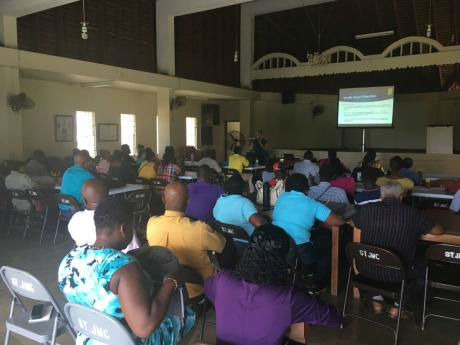
They have been targeting key stakeholders at the local government level, including the municipal council of all the parishes. The consultation were scheduled as follows:

– Wednesday, January 15 – the Spanish Court Hotel in Kingston, which included participants from the Kingston and St Andrew Municipal Corporation, the Portmore Municipal Corporation and St Catherine;

– Friday, January 17 – the Knutsford Court hotel in Kingston, which included participants from Portland, St Thomas and St Mary;

– Tuesday, January 21 – Villa Sonate in St Ann, which included participants from St Ann and Trelawny;

– Friday, January 24 – Knutsford Court Hotel in Kingston, which included participants from Clarendon and St Elizabeth;

Tuesday, January 28 – Oasis Hotel in Negril, including participants from Westmoreland, Hanover and Trelawny; and

Friday, January 31 – Deja Hotel in St James, including participants from St James and Manchester.

“The input that has been provided by the stakeholders so far has been very valuable. We will include as much of the feedback as possible into the final draft. It is good that some of the municipal corporations have begun to think about how they will help implement the National Spatial Plan and how it will relate to their Parish Development Plans,” said Dr Winsome Townsend, project manager for the AP&FM Project, which focuses on integrating climate change issues into development planning.

AP&FM also provides funds for climate change adaptation work in small and medium businesses, as well as communities. The AP&FM project is being implemented by the Ministry of Economic Growth and Job Creation through funding from the Inter-American Development Bank.

CONTENTS OF THE DRAFT

The draft NSP is an eight-chapter document compiled from research and consultations that started in April 2018. The most recent draft of the document covers:

1. Introduction

2. The Planning Context

3. Legislative and Institutional Framework

4. Settlements – Rural and Urban Development

5. Public Utilities Infrastructure

6. Social Amenities Infrastructure

7. Major Economic Sectors – Industries

8. National Spatial Planning Policies and Strategies.

The consultations included the National Environment and Planning Agency, the Rural Agricultural Development Authority, the Housing Association of Jamaica, the Urban Development Corporation, as well as other entities.

Spatial planning refers to the various approaches used by the government and non-government stakeholders to influence the distribution of people and activities in spaces of various scale. An NSP is important to the sustainable development of and use of a country’s resources.
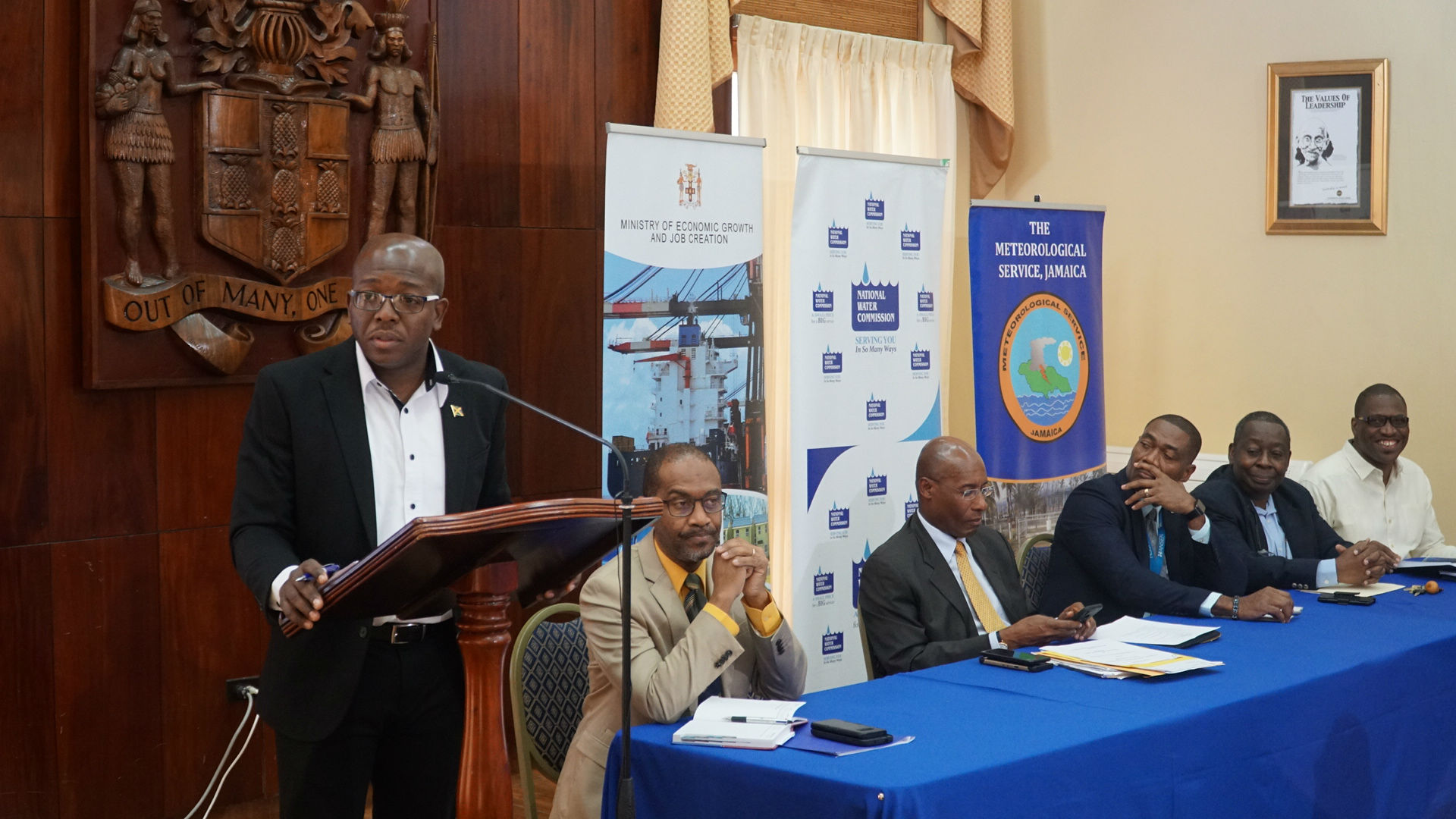
Water Regulations Necessary, says Charles Jr.

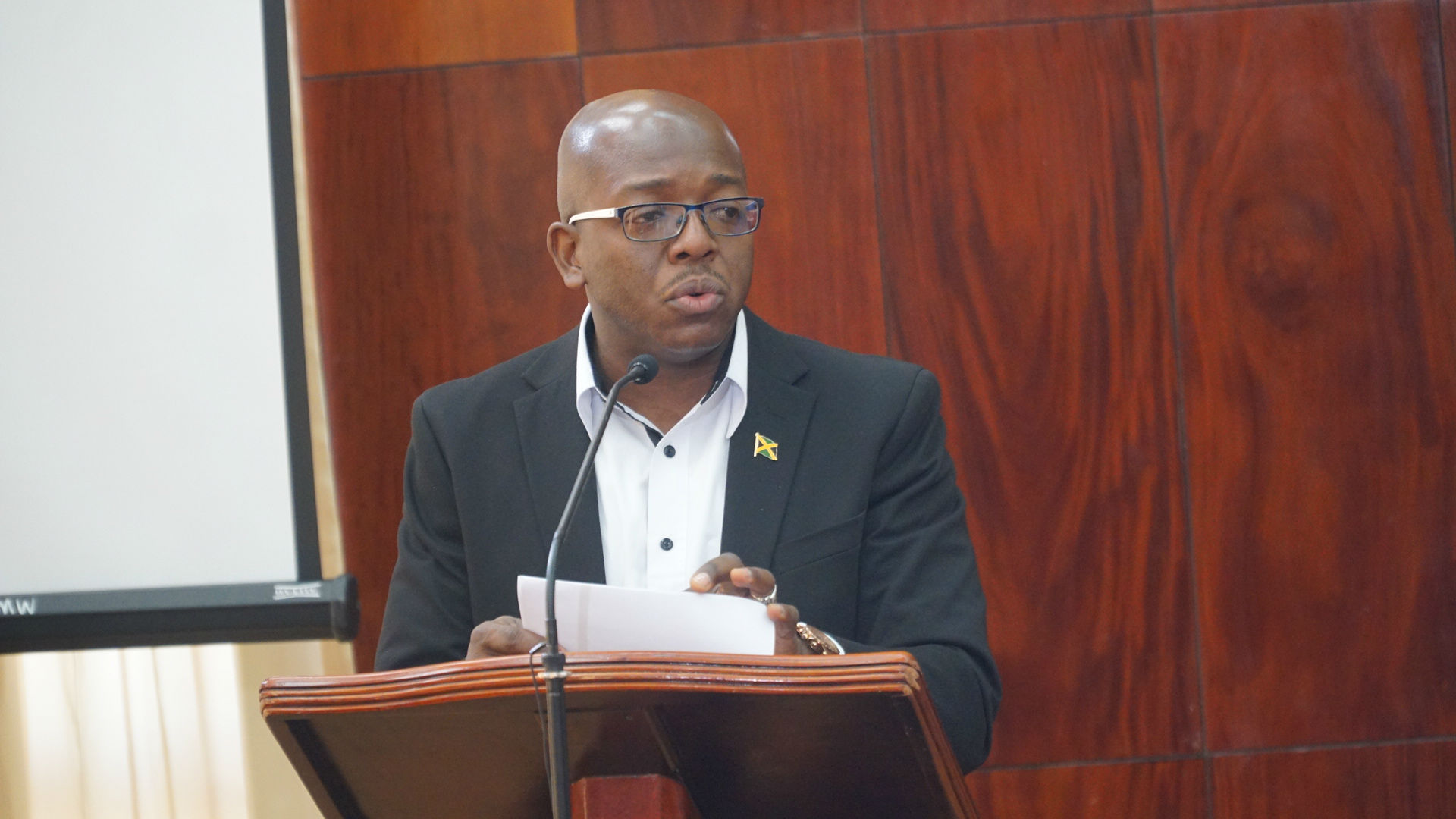
Minister without portfolio in the Ministry of Economic Growth and Job Creation (MEGJC) Senator Pearnel Charles Jr. says water regulation is necessary because the commodity is not enough.

Minister Charles said the forecast, by the Meteorological Service of Jamaica, is for below-normal rainfall and severe drying which will affect the storage levels at the dams and catchment tanks. This means the National Water Commission (NWC) will have less distributive capacity.

He emphasized that “If we don’t get enough, we won’t have enough to give, therefore in order to maintain a particular standard, regulations are put in place”.

He was speaking at a Press Conference convened by the MEGJC at Jamaica House yesterday (Thursday, February 6, 2020).

“This means that persons will have less access to water at times based on the regulations, but more importantly the regulations will allow the NWC to reduce the loss of water from the distribution network due to leaks”, he said.

Government outlines strategies for Drought Management

In outlining the drought mitigation efforts Minister Charles says the immediate and short term plans by the Ministry and its water agencies include:

  • The procurement of 14 additional water trucks to assist in the distribution of water to the hardest-hit areas,
  • Revised operational procedures for payment to truckers,
  • Distribution of black storage tanks,
  • Upgrade of major pipeline infrastructure in the Corporate Area,
  • Continued work on the NWC’s non-revenue water programme,
  • Renovation of Catchment tanks by the Rural Water Supply Limited,
  • Retrofitting several schools with rainwater harvesting systems, and;
  • Increased regulation.

In the meantime, Head of the Meteorological Service of Jamaica, Evan Thompson, explained that as at December 31, 2019, several parishes were experiencing drought conditions while several others have reported drier than normal conditions.

In noting that the country entered 2020 with a deficit, Mr Thompson explained that December 2019 experienced closer to normal conditions… “But normal does not make up for a deficit before and we would need above normal to make up for a deficit”.

While noting that the Branch is in the process of collecting and analysing data for the month of January, Mr Thompson indicated that “January did not produce any excess of rainfall across the country so it’s unlikely that we’ll see any reversal of what we have seen going into December 2019”.

For his part, Senator Aubyn Hill, Chairman of the Board of Commissioners said that the NWC is being proactive with the management of the country’s water resources adding that to this end the entity has taken several steps to ensure that customers will have water throughout the dry period.

“Help us conserve; help us reuse if you can; and help us recycle when you can. It is all of us who are responsible”, Senator Hill implored.

He said the entity has been continuously monitoring the Hermitage Dam and the Mona Reservoir which have been declining, which is not unusual at this time of the year.

Minister Charles announces Multi-Sectoral approach for Drought Management

Minister without portfolio in the Ministry of Economic Growth and Job Creation (MEGJC), Senator Pearnel Charles Jr. this morning (Thursday, February 6) announced a multi-sectoral approach to deal with drought management.

Minister Charles says the Ministry has activated the Drought Management Committee “to manage in a proactive way the execution of the drought management plan…the plan that we have to manage the drought is a multi-sectoral approach to sustainable drought management.”

The Drought Management Committee includes the Ministry of Economic Growth and Job Creation (MEGJC), the National Water Commission (NWC), Water Resources Authority (WRA), Rural Water Supply Limited (RWSL), as well as the National Environment and Planning Agency (NEPA), Ministry of Health (MOH), Ministry of Local Government and Community Development (MLGCD), Office of Disaster Preparedness and Emergency Management (ODPEM), the Rural Agricultural Development Authority (RADA) and other key private sector stakeholders.

Minister Charles Jr. further noted that “the drought management plan was extracted from the National Water Sector Policy and that the Committee is a sub-committee of the Integrated Water Resources Management Council (IWRMC)”.

The Drought Management Plan is also a sub plan of the national disaster plan being developed by the Office of Disaster Preparedness and Emergency Management (ODPEM) which is also the chair of the Drought Management Committee. Minister Charles Jr. was speaking at a Drought Management Press Conference at Jamaica House, convened by the MEGJC.

Earth Today | Clarendon Gets Climate Resilience Boost

ROUGHLY 490 of 1,800 micro-check dams have been constructed in the Upper Rio Minho Watershed Area (URMW) of Clarendon to reduce flooding and build climate resilience in the area.

The micro check dams – used to reduce water flow and by extension reduce erosion – fall under initiatives being done by the Adaptation Programme and Financing Mechanism (AP&FM) of the Pilot Programme for Climate Resilience (PPCR).

More than 15 communities in the URMW have been identified as vulnerable to climate change impacts, such as flooding and hazards, including soil erosion and land slippage.

The AP&FM recently completed climate change and disaster risk reduction plans for the communities of Morgan’s Forest, Rock River, Kellits, Summerfield, Thompson Town, James Hill, Crooked River, Chapelton, Coxswain, Trout Hall, Pennants, Moores, Ritchies, Brandon Hill and Cumberland.

“The URMW is very important to Jamaica’s rainwater harvesting and we want to ensure that it is restored. That will ensure our water security,” said Winsome Townsend, project manager of the AP&FM.

The check dam initiative is part of several other activities aimed at restoring the watershed. These include:

– the installation of 250 communal rainwater harvesting systems and rehabilitation of three rain ponds;

– the installation of 5 aquaponics systems in 5 communities;

– the reforestation of 15 hectares of land; and

– 50 hectares of Agro-Forestry.

The AP&FM is a part of Jamaica’s Pilot Programme for Climate Resilience. It works to help Jamaica adjust more easily to climate change. It supports the integration of climate change issues into development planning by government agencies.

It also provides funds for climate change adaptation work in small and medium businesses, as well as communities islandwide. It is being implemented by the Ministry of Economic Growth and Job Creation and is funded to the tune of US$19,869,963 by the Climate Investment Fund through the Inter-American Development Bank and the Government of Jamaica.


Source: http://jamaica-gleaner.com/article/news/20200206/earth-today-clarendon-gets-climate-resilience-boost

Jamaica and Germany to explore possible collaboration on Eco-tourism projects

January 29, 2020

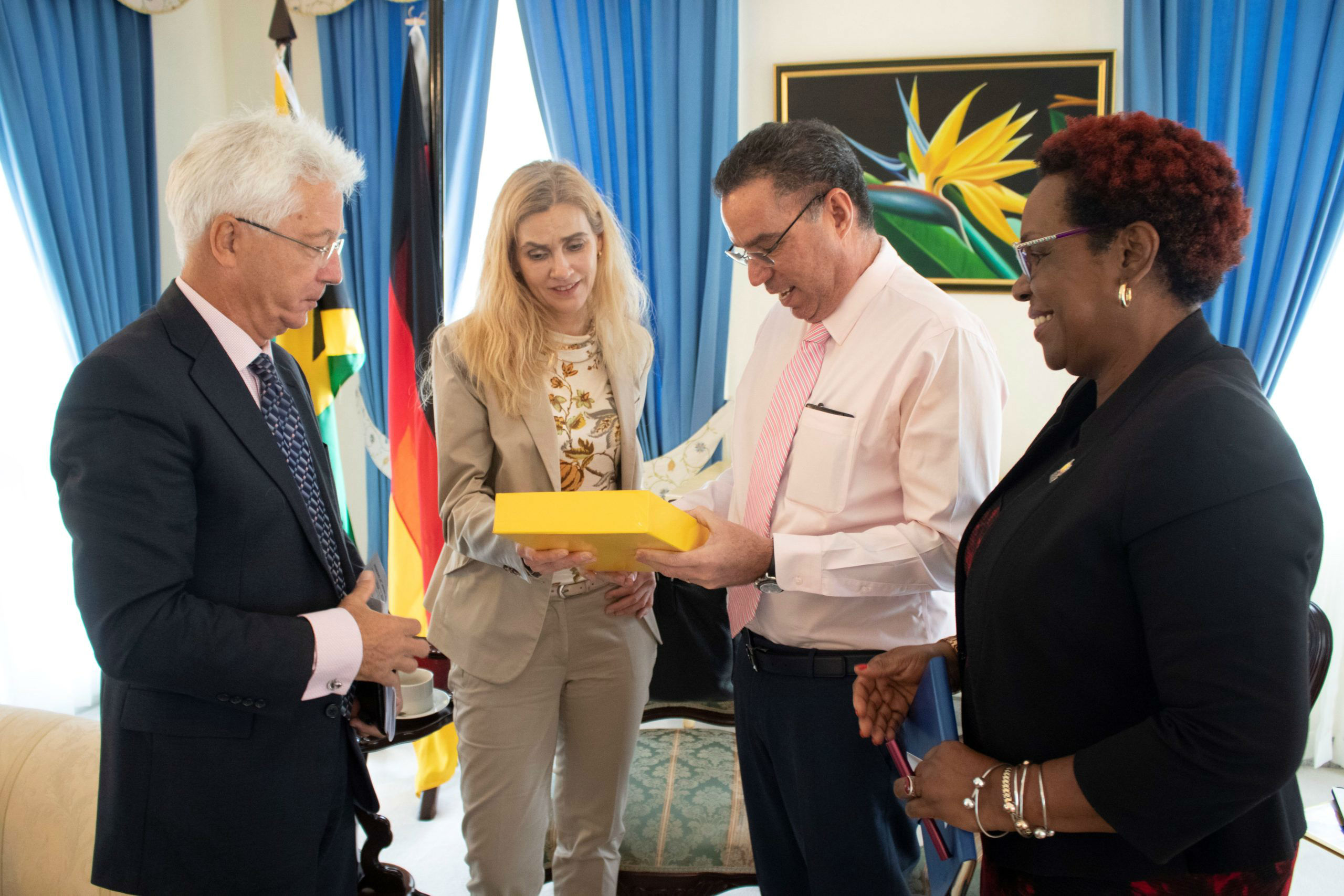
Issues surrounding Climate Change and the Environment were the main topics of discussion at a courtesy call paid to Hon. Daryl Vaz, Minister Without Portfolio in the Ministry of Economic Growth and Job Creation, by H.E. Bernd von Munchow-Pohl, German Ambassador to Jamaica, and Ambassador Marian Schuegraf, Director for Latin America and the Caribbean in the Federal Ministry of Foreign Affairs,Germany.

L-R:  H.E. Bernd von Munchow-Pohl, German Ambassador to Jamaica; Ambassador Marian Schuegraf, Director for Latin America and the Caribbean in the Federal Ministry of Foreign Affairs, Germany; Hon. Daryl Vaz, Minister Without Portfolio, Ministry of Economic Growth and Job Creation (MEGJC); UnaMay Gordon, Principal Director, Climate Change Division, MEGJC

During the meeting held at Jamaica House on Tuesday, January 28, 2020, Minister Vaz, who has responsibility for Land, Environment, Climate Change and Investment, told the Ambassadors that Jamaica has to find the delicate balance between investment and growth, the environment and climate change, noting that the issues are critical ones for the country.

Ambassador Schuegraf who is visiting Jamaica for the first time, expressed her admiration for the country’s beauty and noted that climate change and the environment are two issues to which Germany is committed.  She noted that Jamaica is the leading country in the region in terms of climate change resilience.

Minister Vaz and the German Ambassadors, also discussed the possibility of both countries working together on eco-tourism projects in Jamaica.  According to Ambassador Von Munchow-Pohl, Germany has worked with Costa Rica in the area of eco-tourism which he said, comprises a large portion of Costa Rica’s capital.    

One of the interventions by Germany in the region, the International Climate Initiative (IKI) was also discussed. The project supports the implementation of Nationally Determined Contributions (NDCs) in the Caribbean. 

NDCs represent efforts by each country to reduce their national emissions and adapt to the impacts of climate change. The Paris Agreement requires each Party to prepare, communicate and maintain successive Nationally Determined Contributions (NDCs) that it intends to achieve.

The International Climate Initiative supports the implementation of NDC’s in the Caribbean and specifically targets the transformation of the energy and transport sectors towards a low-carbon and climate-resilient future (NDC-CARIB).

Minister Vaz and Principal Director in the Ministry’s Climate Change Division, UnaMay Gordon, both expressed gratitude for the assistance that Germany has provided to Jamaica in terms of training and financial grants, which have helped the country to become climate resilient.

Urgent Closure Notice

Closure Notice

Ministry of Economic Growth and Job Creation

The public is hereby notified that the offices of the Ministry of Economic Growth and Job Creation will be closed on Thursday, January 23, 2020 for a staff meeting.

The closure will affect the Ministry’s regional offices at:-

Albion Road, Montego Bay

1 Bravo Street, St. Ann

Barracks Rd., Sav-La-Mar and

2 Brooks Avenue, May Pen

Reduced services will be offered at the Negril Green Island Area Local Planning Authority (NIGALPA),  and the Jamaica Special Economic Zone Authority (JSEZA) as well as our Corporate Area offices at:-

 25 Dominica Drive

16a Half Way Tree Road

191 Old Hope Road and

65 Âľ  Half Way Tree Road ( Meteorological Services)

We regret the inconvenience to our valued clients, customers and stakeholders.

The Ministry will resume normal opening hours on Friday, January 24, 2020 at 8:30 a.m.

Government pleased with national response to plastic/Styrofoam ban

Ministry of Economic Growth and Job Creation

For Immediate Release                                                                January 15, 2020

Government pleased with national response to plastic/Styrofoam ban

The Government of Jamaica (GOJ) is extremely pleased with the overwhelming positive national reaction and response to the plastic ban which includes the ban on polystyrene (Styrofoam) products.

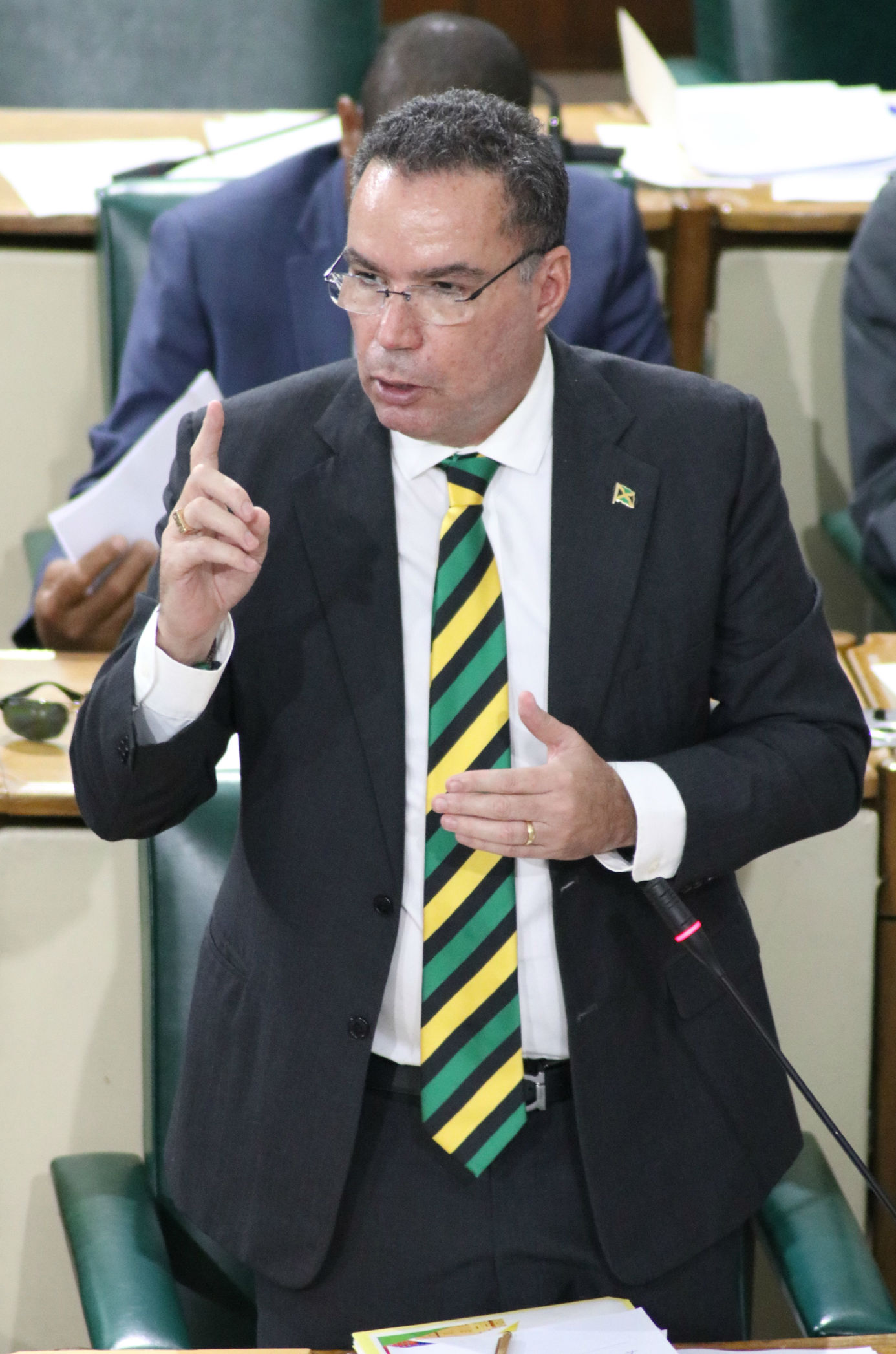
Minister without portfolio in the Ministry of Economic Growth and Job Creation (MEGJC) with responsibility for Land, Environment, Climate Change and Investment, Hon. Daryl Vaz gave an update to the House of Representatives yesterday (January 14), following the recent implementation of the second phase of the ban pertaining to expanded polystyrene (Styrofoam) products,  which came into effect on January 1, 2020.

“The support is estimated at over 90 per cent coming from the sector groups, other stakeholders and consumers in general. Clear evidence of the positive response is the rapid disappearance of single-use plastic bags and plastic straws from the trade and the pronounced behaviour change and attitude coming from the Jamaican people,” Minister Vaz told the House.

“We have now moved to phase two of the ban which restricts the manufacturing, distribution and use of expanded polystyrene foam (Styrofoam) products in the food and beverage industry.

“However, we expect an even smoother transition from the use of Polystyrene products to the alternatives on the market for the simple reason that persons and businesses have had a much longer time to prepare themselves for the ban,” Minister Vaz said.

On September 17, 2018, the Government announced a policy to implement a ban on single-use plastic (scandal) bags, plastic drinking straws and expanded polystyrene foam products used in the food and beverage industry in three phases starting January 1, 2019.

The third phase of the ban pertaining to the importation of straws attached to lunch juice boxes and drink pouches will come in effect as at January 1, 2021.

Minister Vaz noted that the Government developed and implemented a robust public education programme, using all media to support the ban which is but one measure to safeguard the nation’s natural and built environments. 

“In doing so we were careful to engage all stakeholders including the Jamaica Manufacturers and Exporters Association (JMEA);   the Jamaica Chamber of Commerce (JCC); Small Business Association of Jamaica (SBAJ); National Consumers League of Jamaica; individual manufacturers; importers and distributors, among others,” he said.

He further noted that while prosecution is never the preferred strategy, the Government also saw the need to put in place fines for those who are non-compliant as well as ensure that the legislative backing was in place should enforcement of the ban become a challenge.

The maximum fine under the Trade Act (Trade Plastic Packing Material Order) 2018, is two million dollars while under the NRCA (Plastic Packaging Prohibiting) Order 2018, the fine is 50,000 dollars.   Both Orders carry a term of imprisonment of two years, respectively.

To date, six businesses have been fined under The Natural Resources Conservation Authority (Plastic Packaging Materials Prohibition) Order, 2018, while 30 other businesses and individuals will face the courts in the coming weeks, Minister Vaz informed the House.

Speaking to the Deposit Refund Scheme (DRS) which was set up to provide cash to consumers who return their plastic bottles, Minister Vaz said that it is solely a private sector initiative, which is  being implemented through the Recycling Partners of Jamaica.  It was launched during September 2019. 

“This follows the implementation of a $1 cess on plastic(PET) bottles to establish start-up capital.  The Government’s ultimate target in the short-to-medium term is the recovery of at a minimum, 80 per cent of the PET bottles currently on the market,” Minister Vaz added.

He also highlighted that private sector partners have already established islandwide collection centres for PET bottles, and are to further fine-tune the collection system.

“Eighteen locations islandwide have been established as drop-off points by the RPJ, with the collection rate. RPJ will report quarterly to the GOJ, through the Minister with responsibility for the Environment, on its progress, successes and challenges as we move forward,” Minister Vaz said.

–30–

ACCEPT Workshop – Supporting Climate SMART Agricultural Decision Making

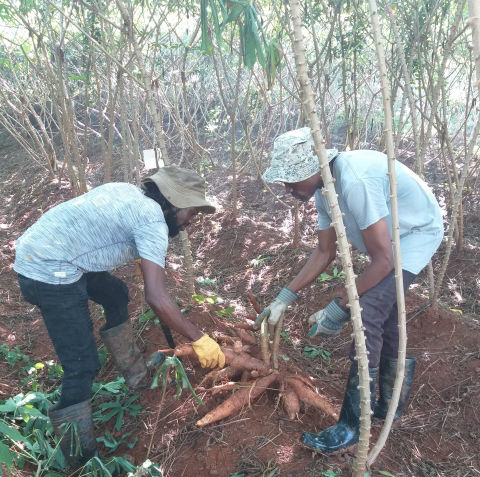
A Climate Impact Assessment workshop was held on December 10th to introduce ACCEPT to stakeholders in the Jamaican agriculture sector, including representatives from MICAF, CARDI, CASE, MEGJC, PIOJ, and the Water Resources Authority (WRA). The workshop provided an overview of the impacts of climate change on agriculture in the Caribbean, including preliminary findings on crop growth and yield. It also offered training in the software application, Decision Support System for Agro-technology Transfer (DSSAT). Participants expressed much interest and satisfaction with the outcomes. ACCEPT stands for Agricultural Climate Change Evaluation for Production, Transformation and Resilience Project. It is a public-private collaboration between the UWI Departments of Physics and Life Sciences, the D&G Foundation, Red Stripe and the Regional PPCR. It is funded by the Adaptation Programme and Financing Mechanism (AP&FM) of the national track of the Pilot Programme for Climate Resilience (PPCR), managed by the Environmental Foundation of Jamaica and implemented by the UWI. Under the project, activities include measuring the impact of ecological factors on root crops, especially cassava; field trials, measurements of growth and weather parameters, and crop simulation models run under different climate scenarios. The project is also developing a user-friendly online platform to mainstream the use of crop modelling technology into yield prediction and optimization.

Earth Today | Risk Profile, Climate Change Adaptation Plans Produced For 15 Clarendon Communities

FIFTEEN COMMUNITIES in the Upper Rio Minho Watershed (URMW) area of Clarendon are now better able to plan for climate impacts and hazards via the development of risk profiles, disaster risk reduction and climate change adaptation plans for each of them.

The plans were completed for the communities of Morgan’s Forest, Rock River, Kellits, Summerfield, Thompson Town, James Hill, Crooked River, Chapelton, Coxswain, Trout Hall, Pennants, Moores, Ritches, Brandon Hill, and Cumberland.

“We are very happy that the plans are now completed and that the communities already have teams in place that are committed to implementing them,” said Dr Winsome Townsend, project manager of the Adaptation Programme and Financing Mechanism (AP&FM) for the Pilot Programme for Climate Resilience (PPCR).

The plans were completed as a part of the deliverables of the five-year AP&FM project.

The 15-climate change and disaster risk reduction plans were a part of a bigger risk profile and climate change adaptation and disaster risk reduction plan being done for the Upper Rio Minho Watershed. The watershed was chosen as a focal area for the AP&FM because of its level of degradation, its exposure to climate change and its associated impacts, as well as its susceptibility to seismic activity.

Additionally, the basin is one of the major ground water producing basins in Jamaica with annual abstraction reaching about 400 million cubic metres (MCM) in one year (Climate Studies Group, 2014).

The risk profiles and climate change adaptation and disaster risk reduction plans were produced by a research team from Environmental Solutions Limited (ESL). The team used modelling scenarios from 2030, 2050 and 2080 climate research to inform the plans.

According to ESL’s project manager for this consultancy, Dr Theresa Rodriguez-Moodie, extensive consultations were held in the communities and with key stakeholder organisations such as the Office of Disaster Preparedness and Emergency Management, the National Environment and Planning Agency, the Clarendon Inter-Agency Network, the Water Resources Authority and Mines and Geology.

Workshops were also held to validate the findings of the studies and to discuss the recommended adaptation measures for the watershed and the communities in October.

PUBLIC AWARENESS KEY TO SUCCESSFUL RISK PLANNING

Rodriguez-Moodie noted that one of the main points consistently raised in these sessions was the issue of awareness and sensitisation.

“We can only implement actions towards a climate and disaster resilient watershed if we know what the issues are. Persons consulted felt that awareness and sensitization sessions towards climate change and its impacts should be done at different levels, focusing on the communities,” she said.

“Persons need to know what it means for their livelihood and how they can start planning. Many persons indicated that they can only afford to cope with the issues as they arise, whereas adaptation requires long term planning. In order to do so they feel if they are more educated and aware of the issues they will be better able to adapt,” she added.

Rodriquez-Moodie said that some of the adaptation measures being explored include revising zoning plans to reduce permitted development in flood zones, liquefaction zones and landslide zones.

Plans for long-term management will also include improving institutional and technical capacity; improving drainage infrastructure; addressing poor farming techniques; and encouraging the replanting of forest trees in the watershed.

Outside of the plans developed, the AP&FM has already started adaptation work in the watershed area. Some of the activities currently under implementation are:

– The installation of 1800 check dams to address flooding;

– Installation of 250 communal rainwater harvesting systems and rehabilitation of three rain ponds;

– Installation of 5 aquaponics systems in 5 communities;

– Reforestation of 15 hectares of land; and

– 50 hectares of Agro-Forestry.

“By helping with the restoration of the Upper Rio Minho Watershed the AP&FM is ensuring the water security of the island especially in the face of the longer droughts that we are seeing with climate change,” said Townsend.

15 graduate from JN Foundation Water Programme

KINGSTON, Jamaica — Fifteen persons, comprising engineers, developers, students and water experts, graduated from a 16-week rainwater harvesting and grey-water recycling training programme, recently.

The training programme was organised by the Jamaica National (JN) Foundation in collaboration with the Inter-American Development Bank (IDB), through the Water Project Jamaica.

General Manager of the JN Foundation, Onyka Barrett Scott, said the graduates were ahead of the curve, given that they were the first batch to be trained in rainwater harvesting and grey-water recycling.

“Today, we are proud to be recognising graduates, who are armed with knowledge about rainwater harvesting and grey-water recycling; therefore, we are confident that they will effectively implement what they learned,” she said.

The general manager explained that the aim of the initiative is to build local capacity in the design and installation of a variety of water efficient measures in the housing sector.

She said participants were exposed to the components of rainwater harvesting systems, water saving devices, which can be implemented by homeowners, to save water, factors which affect water quality, and water standards.

Barrett Scott noted that, in the case of Jamaica, drought and the shifting patterns of rainfall are already creating serious challenges, which negatively impact the country’s water supply and distribution system.

She further explained that the problem of inconsistent water supply has a devastating effect on families, institutions and communities and affect the business models of housing developers and construction companies, as was experienced this past summer.

In addition, she said the limited financing and an uncertain business case for water adaptation are barriers to the uptake of water efficient measures by the housing development sector.

“The Water Project Jamaica, therefore, aims to tackle these issues through the provision of an impactful, scalable model which will enhance Jamaica’s climate resilience,” she posited.

Minister in the Ministry of Economic Growth and Job Creation, Senator Pearnel Charles, commended the JN Foundation and its partners for the training and encouraged the graduates to implement what they learned.

“I’m challenging you, so that, it does not become another line on your resume,” he said.

The minister also underscored the importance for the country to have strong water policy guidelines and gave his commitment to move the plan from draft stage to legislative format saying, “We have to press on the gas to have it completed”.