
| Mon - Thur 8:30 am - 5:00pm, Friday 8:30 am - 4:00 pm
| Government of Jamaica ja-flag

Ministry of
Economic Growth
& Infrastructure Development

Author: Stephon.johnson@megjc.gov.jm

Earth Today | Climate-Smart Aquaponics Farming Appeals To Local Teacher

Margaret Lothian is a teacher of 31 years who is now contemplating a career change, following her recent involvement in a community project on aquaponics farming.

“I’ve been acting as vice-principal for the past two years. I have been in teaching for almost 31 years, and right now I would leave it to do aquaponics farming full- time,” said Lothian, who teaches at Aenon Town Primary in Clarendon.

She is one of several community members who have been participating in an aquaponics project funded by the Adaptation Programme and Financing Mechanism (AP&FM) Project of the Pilot Programme for Climate Resilience (PPCR). The AP&FM is administered by the Ministry of Economic Growth and Job Creation, with funding from the Climate Investment Funds through the Inter-American Development Bank.

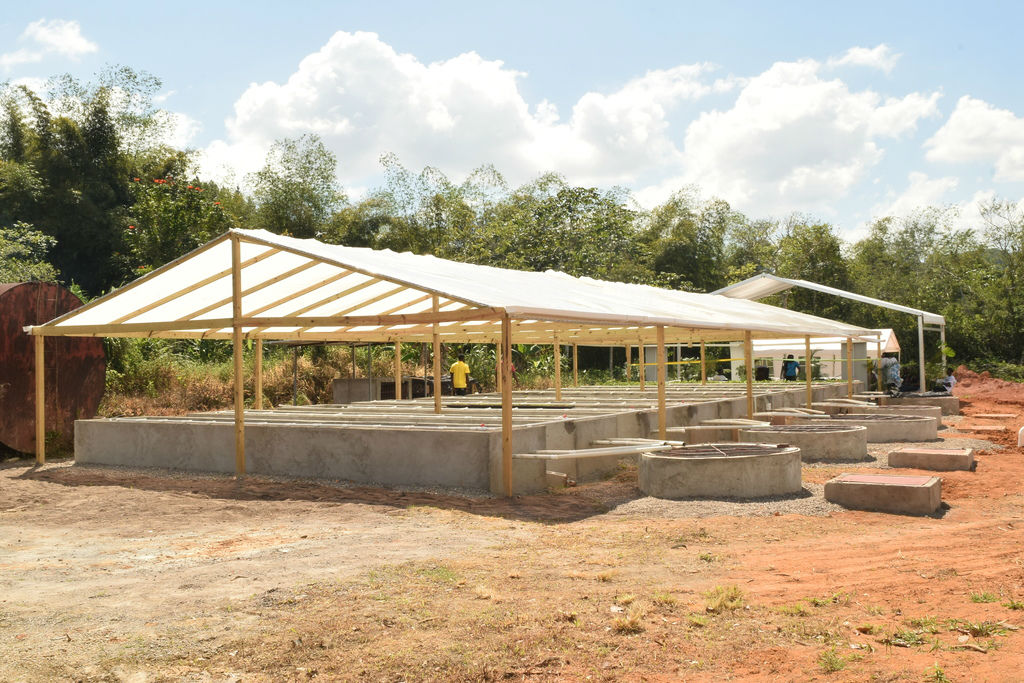
The Aquaponics Farming Project is operational in five rural communities: Aenon Town, Ritchies, Alston, Johns Hall, and James Hill in the Upper Rio Minho Watershed Area of Clarendon. The five communities have a combined population of over 10, 333 persons and are operating their new aquaponics systems through community development committees.

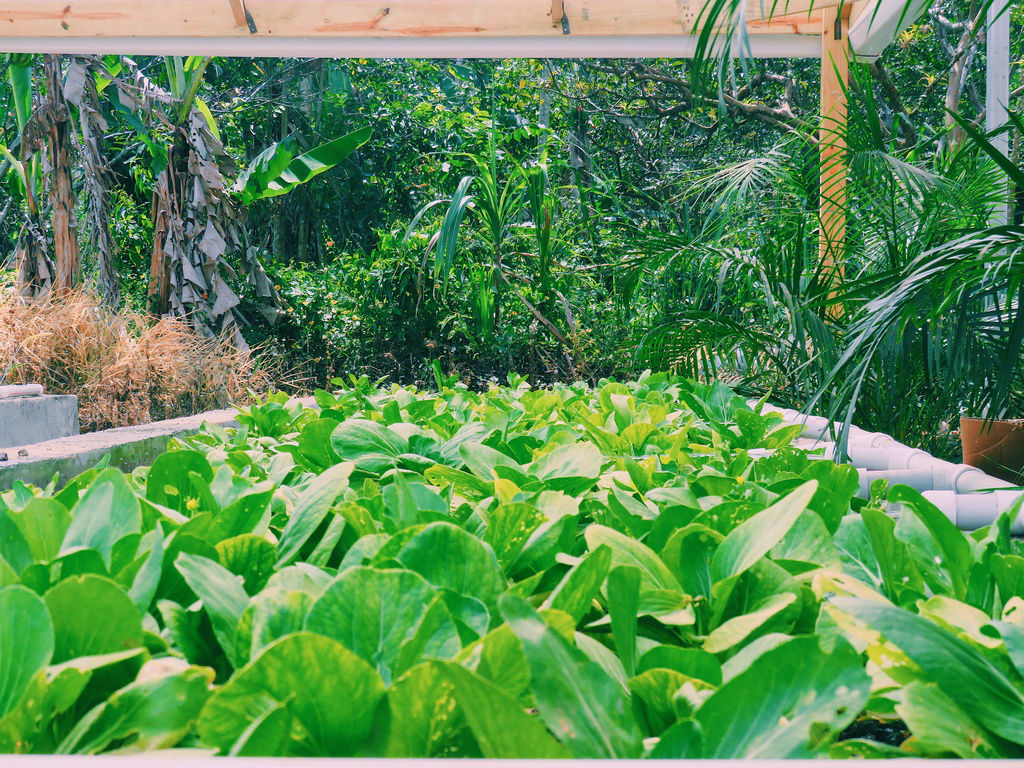
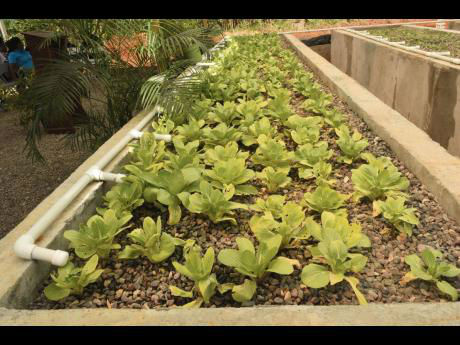
“Aquaponics is an innovative farming technique that combines aquaculture (fish farming) with hydroponics (soil-less crop production). It is a method that boosts crop production up to 10 times higher than traditionally cultivated plots of equivalent size.

It uses 85-90 per cent less water and no chemical fertilisers or pesticides. It uses low energy consumption, providing year-round crop production and calls for much less labour than traditional farming, making it much more attractive for vulnerable groups such as persons with disabilities.

The aquaponics project started in December 2018 and is part of the activities undertaken to reduce Jamaica’s vulnerability to climate change.

Even before COVID-19, the island has been experiencing impacts, such as stronger hurricanes, severe flooding, prolonged droughts and sea level rise. Between 2001 and 2012, Jamaica experienced 11 storm events (including five major hurricanes) and several flood events, amounting to loss and damage of some J$128.54 billion.

Some of the new systems are recently completed, but already, farmers have reaped crops and sold at farmers’ markets, Lothian said. The options for marketing are many.

NOT WITHOUT CHALLENGE

“We have ALEX (a Government of Jamaica-run project to distribute fresh farm products); there is the farmers’ market; and other options are available to us,” noted Lothian.

“The successful planting out of our grow beds with different crops such as pak choi, cucumber, scallion, strawberry and tomato; raising the fish and watching them grow from fingerlings to sizes including quarter-pound; successfully reaping and selling crops; and getting community persons involved in the project,” the teacher added, noting what she considers project achievements to date.

Still, the aquaponics project is not without its challenges. Lothian pointed to praedial larceny, farmers needing water to keep the system going, and the difficulty of finding time to spend on the farm as being among them.

However, with so many opportunities available to market the output, the teacher is thinking of making a career switch so she can have more time.

“Aquaponics farming is a great way to farm. The impact on the lives of individuals is significant as they have learnt a climate-smart way to grow crops without destroying the environment. It offers a fast income, and it’s not as taxing on the body as farming in the grounds,” she said.

“Aquaponics has been helping us to adapt to climate change. This system does not use as much chemicals as regular farming does, and whatever is used on the crops has to be safe for the fish. There is no need to slash and burn and release harmful substances into the atmosphere. The system also uses less water than regular farming as the water is recycled,” she added.

Bill tabled to amend the Special Economic Zones Act

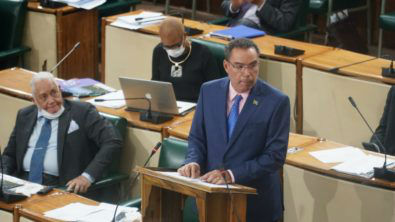
Minister Without Portfolio in the Ministry of Economic Growth and Job Creation (MEGJC) Hon. Daryl Vaz recently presented the Bill entitled, An Act to Amend the Special Economic Zones Act, to the House of Representatives for its consideration.  

Minister Vaz told the House that steps have been taken to have an integrated framework in place for the Special Economic Zones regime, for which the Special Economic Zones Act was passed in January 2016 and made effective in August 2016, and the Special Economic Zones Regulations, more recently Gazetted in September, 2017.

Minister Vaz was making his contribution to the Parliamentary Debate on July 6, 2020.

He recalled that when the Act was first passed ‘Minister’ was defined at section 2 as the Minister with portfolio responsibility for Industry and the Act went into effect with the same portfolio designation.

“On this Administration taking over, the regime was placed under the portfolio of the Minister with responsibility for Special Economic Zones, which is the Ministry of Economic Growth and Job Creation,” he explained.

He further explained that for continuity and technical accuracy, in December 2017 section 2 was amended by deleting the definition of ‘Minister’.

“Consequent on this deletion the references to the word ‘Minister’ as used throughout the Act, are now interpreted as an operation of law based on the Interpretation Act,” he said.

He told the Honourable House that it is on the basis of ensuring continuity and technical accuracy throughout the Act that “we now take the Bill to amend Part II of the Third Schedule of the Act by deleting paragraph 1(1)(b) to reflect the change in portfolio responsibility from the Minister with responsibility for Industry to the Minister responsible for Economic Growth and Job Creation.”

He noted that the paragraph currently provides that:

(1) The Board shall consist of – (b) “A senior public officer in the Ministry responsible for industry, nominated by the Permanent Secretary in the Ministry responsible for industry, who shall be the members ex officio:”

The amendment tabled now reads:

“(b) a senior public officer in the Ministry responsible for Special Economic Zones, nominated by the Permanent Secretary in the Ministry responsible for Special Economic Zones, who shall be a member ex officio;”.

Special Economic Zones are geographically demarcated areas within countries for investment attraction of value-added production and services which benefit from fiscal incentives.

Water Agencies step up Drought Initiatives

The Meteorological Services Branch (Met Service) and the National Water Commission (NWC) along with other key Agencies in the Water Sector have stepped up their efforts this year to strengthen the country’s response to drought management.

According to Minister Without Portfolio in the Ministry of Economic Growth and Job Creation (MEGJC) Hon. Daryl Vaz,  the Met Service which is responsible for sounding an alarm when meteorological drought conditions are expected or are being experienced,  has put in place plans to increase coverage of automatic weather stations by another 15 per cent during this financial year 2020/2021.

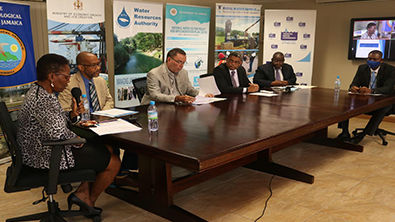
Minister Vaz who has responsibility for the  Water and Housing portfolios, was speaking at a virtual press briefing that was convened at the Ministry’s New Kingston offices recently, to update the nation on the water initiatives that are currently being undertaken by the island’s key water agencies, as well as their individual and collective response to the yearly drought experienced by the country.

Minister Vaz explained that the Met Service currently monitors a network of 103 manual rain-gauges, four (4) rainfall intensity gauges and 100 automatic weather stations across the length and breadth of the island.   He noted that this is still short of the number required to give complete coverage of all 14 Parishes “but does provide very good representation of wet and dry conditions being experienced around the country to varying degrees”.

In explaining the need for the installation of the automatic weather stations, Minister Vaz said there is capacity at this time to relay rainfall information in real-time by only about 10 per cent of the automatic network. 

However, he said by this time next year, this will be possible from over 90 per cent of the stations, allowing for drought determination in a much more timely manner. 

In keeping with the mandate of the National Water Sector Policy and Implementation Plan (2019), the National Water Commission (NWC) in the meantime has stepped up its efforts to ensure access to potable water through the installation of several major pipelines and other infrastructure to improve supply to several communities across the Corporate Area.

Minister Vaz says the installation of these pipelines are not only important to the NWC’s comprehensive plans for efficient distribution of the commodity, but are also part of broader efforts to build resilience and reliability within the network. 

The Water Resources Authority (WRA) among its several initiatives has improved its capacity to determine the amount of water that is available in the island especially during the drought period. This includes the upgrade/maintenance of 15 new and existing river gauging stations.

Minister Vaz said this programme will allow for improved data capture that will enhance analysis and recommendations that are critical to the Development Approvals Process, the applications for abstraction and for charting responses to weather and climate extremes such as floods, droughts and climate change.

In the meantime, the Rural Water Supply Limited (RWSL) has approached the water challenges through the Rural Water Upgrading Programme; catchment tank rehabilitation;  and the provision of rainwater Harvesting facilities, particularly in schools.

                                                                        –30–

Updated NDC receives Cabinet approval as Jamaica seeks to increase climate action

Jamaica’s updated Nationally Determined Contribution (NDC) has received approval from the Cabinet and has been uploaded to the NDC Registry of the United Nations Framework Convention on Climate Change (UNFCCC).

Under the terms of the Paris Agreement, which Jamaica ratified in 2017, countries are expected to periodically prepare Nationally Determined Contributions, (NDCs), which symbolize the actions countries are taking to reduce greenhouse gas emissions and enhance carbon sinks to help reach the temperature goal of the Agreement.

Jamaica has taken several steps to broaden its ambition in two key sectors, Energy and Forestry, to reduce its carbon footprint and address the challenge of Climate Change.

This reflects the importance of the forestry sector to Jamaica, which accounts for more than half of the island’s total land use, and the important commitments that the country has made to preserve and enhance its forest stocks.

During a global NDC stakeholder briefing, convened by the Climate Change Division, it was disclosed that 17 per cent of the emission reductions are expected to come from the forestry sector due to the ‘No Net Loss of Forestry’ commitments and the current initiative to plant 3 million trees.

The country has also identified opportunities to deepen the emission reductions, based on projects, programs, and new initiatives in the energy sector. These opportunities are part of an increasingly comprehensive approach to de-carbonizing this sector that covers both the electricity generation, as well as energy use sub-sectors.

The result of these positive changes is that Jamaica’s climate targets will be significantly more ambitious.

By 2030, it foresees emission reductions covering these two sectors of between 25.4 per cent (unconditional) and 28.5 per cent (conditional). 

This implies that emissions in these sectors would be 1.8 to 2.0 Metric Tonnes Carbon Dioxide Equivalent (MtCO2e) lower, than they otherwise would be, compared with 1.1 to 1.5 MtCO2e in the previous NDC.

The updated NDC has also taken adaptation into consideration with several environmental and resilience-based co-benefits expected to be achieved when the NDC is fully implemented.

As a Small Island Developing State, the physical risks of climate change are a particular threat to the development, wellbeing and economic security of Jamaica and its citizens.

–30–

Farming communities get a helping hand through COVID

The dislocation caused by the spreading coronavirus (COVID-19), was nowhere as marked as in the farming sector in rural Jamaica, where men and women saw their earnings contract and some altogether disappear.

And as their earnings shrank, they also lost the ability to buy necessary inputs to plant again. Inputs like water, without which it is impossible to cultivate new crops.

The intervention of the Adaptation Programme and Financing Mechanism (AP&FM) Project, a Pilot Programme for Climate Resilience (PPCR) has been critical in helping farmers in five Clarendon communities to resolve these issues, stepping in to provide equipment and water for aquaponics farming.

Community Animator Dr Bridgette Barrett explains, “Given that primary beneficiaries of the AP&FM project are farmers and some of them lost produce and markets due to COVID, we decided to assist with water to help to ‘save’ some of the crops that were left. They didn’t lose jobs but lost earnings.”

“Now they will be better able to adapt to climate change and increase their earning capacity.”

In March the communities of Aenon Town, Ritchies, Alston, Johns Hall and James Hill, with a combined population of over 10, 333 persons, were introduced to new aquaponics systems operated by their Community Development Committees.

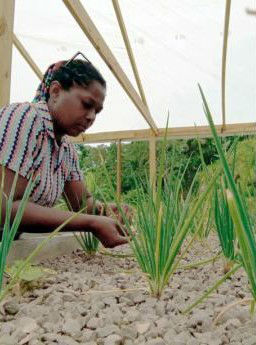
Aquaponics is an innovative farming technique that combines aquaculture (fish farming) with hydroponics (soilless crop production) into a closed system that is resilient to destructive climate change events.

It is a method that boosts crop production up to 10 times higher than traditionally cultivated plots of equivalent size. It uses 85 to 90 per cent less water and uses no chemical fertilizers or pesticides.

It is low energy consumption providing year-round crop production and uses less labour than traditional farming, making it accessible to individuals with disabilities, beneficial for female-led households and attractive to youth.

aquaponics farm

Barrett outlines that the AP&FM COVID-19 response project has two components. The first was to provide 97,000 gallons of water to farmers in the Bull Head Mountain region and at the five aquaponics systems and assisting with storage to harvest water. The water supply component is being implemented in three phases.

To date, she outlines, phases one and two have been completed, resulting in the delivery of 49,000 gallons of water. The remaining 48,000 gallons for phase three will be supplied between June and August 2020 to the aquaponics sites weekly to assist with mainly the water levels in the fish tanks for optimal functioning.

“Forty-nine 650 gallon water tanks are being procured for delivery in June 2020 to farmers in the Bull Head region to assist with rainwater harvesting,” Barrett said.

Plants are not yet ready for reaping, as the systems are new, but farmers who have chosen to participate are now looking at the future with hope.

Carmen Dillion, a farmer from James Hill said “Aquaponics is an answer to some of the issues farmers face in plant production. We have not yet reaped any crop but fish and pak choi will soon be ready.”

She and other farmers are hoping that in time they will find a good market including higglers, hotel, canteen and restaurant suppliers, RADA connections, nearby markets and from community members.

The achievements to date, she said include, “learning a new effective method of food production and networking which creates avenues to access funding”.

There are still some challenges to be faced including the lack of financial resources to contract full-time staff and some resistance to change by farmers who are still doubtful about the new farming method.

Dillon says there is also no building facility (storage space, bathroom etc).

Nevertheless, she says that amidst the resistance to change, and the building of the system some farmers understand they will be using less land space.

“Farmers will do less work, have less need of capital but will get quick and high yield of food, she added, also noting, “plants can be grown in any climatic condition throughout the year so yes they think it will help them adapt to climate change.”.

“They also have no need to buy synthetic fertilizer, herbicides and pesticides and aquaponics also involves limited use of water,” she noted.

The farmer outlines that in these ways the farming practice is good for the environment, also including the use of no soil and no soil erosion.

Margaret Lothian from Aenon Town comments, “The Aquaponics system has changed not just my life, but the lives of residents of the community.  This is a system that creates job opportunities for several unemployed persons.”

At present the Aenon town farmers have pak Choi, tomato and scallion which Lothian says, “are doing well but owing to repair work being carried out not all grow beds are planted out.”

The farmer says she is looking forward to the community getting a “chance to uplift itself as funds generated will be used to fund other projects.

She added, “This project now attracts funding from outside the community. Interested parties will see what is happening and hopefully invest in the community.”

The aquaponics system is a part of the activities undertaken under the AP&FM to help to reduce Jamaica’s vulnerability to climate change.

Barrett reflects, “the approach had to be different given COVID-19, so there was heavy reliance on procurement being coordinated remotely and working closely with community leaders to coordinate the selection of beneficiaries, verification and delivery.”

She also noted that under COVID, “Some of the farmers lost produce or had to sell at lower prices to recoup some of their costs. The drought being experienced amplified the effects and so it was necessary for the AP&FM project to assist in providing water.”

Earth Today | Water Relief For Vulnerable Farmers In Upper Clarendon

More than 68 farmers in drought-stricken communities in the Upper Rio Minho Watershed area of Clarendon have so far received 49,000 gallons of water, with another 48,000 to be delivered over the next three months.

The effort forms a part of the Adaptation Programme and Financing Mechanism (AP&FM) project’s COVID-19 response.

“Given that the primary beneficiaries of the AP&FM project are farmers, and some of them lost produce and markets due to COVID-19, we decided to assist with water to help to ‘save’ some of the crops that were left. They didn’t lose jobs, but [they] lost earnings,” said Dr Bridgette Barrett, community animator with the AP&FM project of the Pilot Programme for Climate Resilience.

“Now, they will be better able to adapt to climate change and increase their earning capacity,” she added.

The AP&FM COVID-19 response is to provide 97,000 gallons of water and assist farmers with storage to harvest water in the Bull Head Mountain region and at the five aquaponic systems recently built by the AP&FM Project in the communities.

The water supply component is being implemented in three phases. Phases one and two have been completed and resulted in the delivery of 49,000 gallons of water. The remaining 48,000 gallons for phase three will be supplied from June to August 2020 to the aquaponics sites weekly, to assist with the water levels in the fish tanks for optimal functioning.

“Forty-nine 650-gallon water tanks are being procured for delivery in June 2020 to farmers in the Bull Head region to assist with the storing of water,” noted Dr Barrett.

In March, the communities of Aenon Town, Ritchies, Alston, Johns Hall, and James Hill – with a combined population of over 10, 333 persons – were introduced to the new aquaponic systems operated by their Community Development Committees.

INNOVATIVE FARMING

Aquaponics is an innovative farming technique that combines aquaculture (fish farming) with hydroponics (soilless crop production) into a closed system that is resilient to destructive climate-change events.

It is a method that boosts crop production up to 10 times higher than traditionally cultivated plots of equivalent size. It uses 85-90 per cent less water and no chemical fertilisers or pesticides. It is low-energy consumption providing year-round crop production, and uses much less labour than traditional farming.

“Aquaponics is an answer to some of the issues farmers face in plant production. We have not yet reaped any crop, but fish and pak choi will soon be ready,” said Carmen Dillion, a farmer from James Hill.

She and other farmers are hoping that in time they will find a good market, including higglers, hotel, canteen and restaurant suppliers, Rural Agricultural Development Authority connections, nearby markets, and from community members.

Many farmers across Jamaica have been significantly affected by COVID-19 as they lost one of their main markets with the closure of the hotels and the tourism sector. They have sought substitute markets and lowered their prices to recoup some costs. They have suffered major losses and need support to replant to ensure Jamaica’s food security. The farmers in the Upper Rio Minho Watershed are grappling with the impact of COVID-19 and drought conditions.

As a result, the AP&FM project, as a part of its COVID-19 response, liaised with farmers to find out their immediate needs. They indicated the need for water to assist with supporting their farms, as well as getting adequate storage capacity to harvest rainwater for their farms. The project has moved to help to address those needs.

First Pilot Carbon Assessment carried out in the Bogue 2 Forest Reserve

The Forestry Department, an agency of the Ministry of Economic Growth and Job Creation (MEGJC), has reported that it carried out its first pilot carbon assessment in the Bogue 2 Forest Reserve in St. Ann, calculating a total of 32,584.048 tonnes of carbon per hectare.

The disclosure was made by Minister Without Portfolio in the Ministry, Hon. Daryl Vaz, who was making his contribution to the 2020/2021 Sectoral Debate in the House of Representatives yesterday (June 23, 2020).

Minister Vaz said, “this is a significant achievement for the Agency and the country towards its capacity to become REDD+ Ready”. 

REDD+ refers to reducing emissions from deforestation and forest degradation in developing countries. The programme looks at the role of conservation, sustainable management of forests, and enhancement of forest carbon stocks in developing countries.

The Minister noted that the Forestry Department has also identified JMD$240 million to support alternate livelihood activities for local communities.

“During the financial year, 27 proposals identified and valued at over J$133 million were awarded.  The remaining amounts/projects will be identified and awarded in the 20/21 FY. One hundred and nine hectares of denuded lands were reforested across the island, surpassing the target of 100 hectares,” he said.

Additionally, Minister Vaz noted that for the financial year, a total of 671 employment opportunities were provided for 667 casual workers from rural areas/communities close to forests, in the areas of plantation maintenance, reforestation, Biophysical Inventory and Volume Assessments.

This he said, represents an 18 per cent increase over the 569 casual employment opportunities provided during the last financial year.

Minister Vaz told the House that it is anticipated that for the current financial year, the Forestry Department will be embarking on the reforestation of 150 hectares and maintenance of 588 hectares as well as the verification of 1000 parcels of privately-owned Closed Broadleaf forest lands.   It will also assess the 2500 hectares of Mangrove forest and complete the Bill to amend the Forest Act (1996).

“There will also be ongoing implementation of the National Forest Management and Conservation Plan 2016-2026 and the continued implementation of the 2-year US$613,000 project to assist the country in its National REDD+ Readiness Management arrangements,” he added.

–30–

Saharan Air Layer to intensify over the next 24 Hours 

10:00 a.m Satellite imagery of the Saharan Air Layer across the Caribbean and Jamaica. The greatest intensity is now just south of Hispaniola and just east of Jamaica.

The Saharan Air Layer, SAL (Dust plume) which has been affecting the island since yesterday is expected to intensify over the next twenty-four hours.

Acting Head of the Weather Branch, Meteorologist Rohan Brown said the country is currently experiencing a reduction in visibility.

“In keeping with the forecast as of 10:00 a.m. today, (June 23) the horizontal visibility has reduced to 4 Kilometres in Kingston and 5 Kilometres in Montego Bay. On a normal day the visibility is usually greater than 10 Kilometres with the average anywhere between 16 and 20 kilometres, so clearly we are seeing a reduction in visibility as a result of the increased dust particles in the atmosphere associated with the Saharan Air Layer.”

Director of the Meteorological Service of Jamaica, Evan Thompson said the country is likely to see the worst case of the plume on Wednesday (June 24) and it will gradually dissipate as we get into the weekend.

“The conditions are expected to continue during the week but we will see more of an impact on Tuesday (June 23), then on Wednesday we are likely to see the worst case of this current plume that is moving across us and it will gradually dissipate as we get into the weekend”, said Mr Thompson.

Satellite images from the past few days show the thick dust moving off the west coast of Africa, crawling across the Atlantic and eastern Caribbean on Sunday, and now moving into the Central Caribbean.

Mr Thompson further explained that “as the plume moves across the Caribbean and covers the Jamaica area we will see the increase in dust particles suspended in the atmosphere; there will be an increase in the hazy conditions across the country and we will also notice some depositing of dust particles on surfaces”.

It is expected that the country could experience another episode of the Dust plume over the next week or two. Right now the current phase is expected to last only a week but it could reoccur in the next couple of days. 

In the meantime, Mr Thompson added that the plume will also impact storm activity.

“The plume will also cause a trapping of the heat closest to the surface of the earth and so we could be seeing an increase in temperatures. This type of activity will also prohibit rainfall… There are likely to be more dry conditions and less of the storm activity during the period that we are affected by the Saharan Dust plume”, he explained.

The arrival of the Saharan dust layer is not unusual and happens every year between May and October. The plumes are usually short-lived, lasting no more than a week. However, what is different this year is the thickness of the plume that is observed on the satellite imagery and as a result we are expecting greater concentrations in the dust levels.

–30–

Jamaica commemorates International Day for Biodiversity with week of activities

On May 22, 2020 Jamaica will join countries around the world in celebrating the International Day for Biological Diversity (biodiversity) under the theme “Our Solutions are in Nature”

During the week of May 18 to 21, the Ministry of Economic Growth and Job Creation and its environment portfolio agencies, will celebrate a week of activities leading up to International Biodiversity Day.

Among the activities are virtual lunch hour presentations at 12:30 pm each day. Topics to be discussed are

  • Monday, May 18 – Integrated Management of the Yallahs Hope River Watershed Areas Project-payment for ecosystem services
  • Tuesday, May 19  – Invasive Fern Removal and Native Plant Restoration
  • Wednesday, May 20 – Forests as a Solution -A National Approach
  • Thursday, May 21 – Solutions from the Blue and John Crow National Park and World Heritage site

On May 22, the International Day for Biological Diversity, the Ministry and its agencies will host a Virtual Panel Discussion centered on the theme, “Our Solutions are in Nature-The Jamaican Context”.

Panelists are:

  • Mr. Richard A. May – CEO, ECHOS Consulting Limited
  • Professor Mona Webber – Deputy Dean, Faculty of Science and Technology, University of the West Indies, Mona
  • Mr. Lawrence Nelson – Manager, Silviculture, Forestry Department
  • Mrs. Keron Crossman Johnson – Environmental Health Specialist, Port Health and Quarantine & Institutional Health, Ministry of Health and Wellness
  • Mr. Peter Thompson – CEO, Rural Agricultural Development Authority
  • Mr. Anthony McKenzie – Director, Environmental Management and Conservation, NEPA

The discussion will commence at 9.30 a.m. and will be carried on Facebook Live on the Facebook page of the Ministry of Economic Growth and Job Creation- @megjc_ja; the National Environment and Planning Agency @nepajamaica and the Forestry Department @forestrydepartment.

Join the discussions during the week as we celebrate biodiversity in all its forms.

–30–

Posted in New