| Mon - Thur 8:30 am - 5:00pm, Friday 8:30 am - 4:00 pm
| Government of Jamaica ja-flag

Ministry of
Economic Growth
& Infrastructure Development

Author: Stephon.johnson@megjc.gov.jm

Low-Cost Housing Design Competition

Low-Cost Housing Design Competition

Overview

As part of efforts to ensure that all Jamaicans achieve their fullest potential through, inter alia, effective social protection, the New Social Housing Programme (NSHP) was implemented in July 2019 by the Ministry of Economic Growth and Job Creation (MEGJC), to improve the housing condition of the country’s indigent population.  The NSHP aims to provide quality, affordable and sustainable housing and associated services for the indigent and other vulnerable persons currently living in sub-standard conditions and is underpinned by a number of strategic objectives to include: sustainable, low cost housing stock of the highest quality, which adheres to all health, safety and environmental standards.

It is within this context that the MEGJC extends an invitation for eligible individuals to submit low cost, sustainable, climate resilient architectural designs, for the houses to be built under the NSHP.


HOW TO APPLY/PARTICIPATE:

  • Email your queries and Competition Application Form to lowcosthousingdesign@megjc.gov.jm
  • Next Steps: Please read page two (2) of the Competition Document below for additional steps on how to participate in the Competition.

Forms & Supporting Documents


Work On Boundbrook Industrial Estate To Begin In Second Quarter

Work On Boundbrook Industrial Estate To Begin In Second Quarter

WRITTEN BY: ROCHELLE WILLIAMS- JAMAICA INFORMATION SERVICE

Construction of the Boundbrook Industrial Estate in Portland is expected to commence in the second quarter of the 2021/22 financial year.

Minister without portfolio in the Ministry of Economic Growth and Job Creation, Hon. Everald Warmington,  made the disclosure during his contribution to the 2021/22 Sectoral Debate in the House of Representatives on May 5.

He said that the works will be conducted in two phases over a 24-month period.

Under the project, the Government plans to utilise lands owned by the Factories Corporation of Jamaica (FCJ) and the National Insurance Fund (NIF) in Boundbrook, Portland, to facilitate the relocation of 11 government agencies.

“The construction budget is estimated to cost $1 billion. There will be a return on investment through lease/rentals,” Minister Warmington said.

The Boundbrook project is a joint venture between the FCJ and the NIF and will involve the buildout of 100,000 square metres of factory space to house government and private-sector entities.

“A feasibility study has been completed and has indicated that significant value can be created for the people of Port Antonio and the surrounding areas with this development,” Minister Warmington told the House.

A contract was signed in February 2021 with GW Associates Consultants to commence detailed development drawings in alignment with the conceptual drawings that were previously approved.

Meanwhile, Mr. Warmington told the House that detailed designs for the development of the Naggo Head Technical Park in Portmore, St. Catherine, and the redevelopment of the Hayes Free Zone in Clarendon will be finalised during the fiscal year.

Earth Today | Aquaponics taking off at College of Agriculture, Science and Education

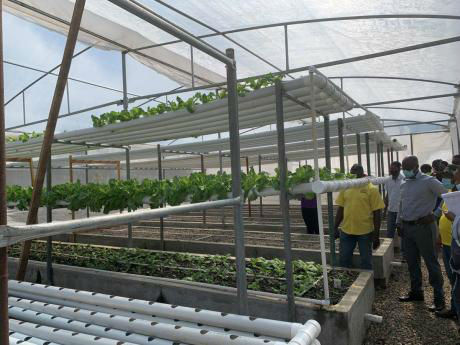
AQUAPONICS is gaining traction at the College of Agriculture, Science and Education (CASE), where students are exposed to the farming method that combines aquaculture, or fish farming, with hydroponics, or crop production without soil, to boost yields.

CASE initially received a grant from the Environmental Foundation of Jamaica, through the Adaptation Programme and Financing Mechanism (AP &FM) for the Pilot Programme for Climate Resilience, to build the aquaponics system. The aquaponics farm now enables practical experience for students studying agriculture at the institution ,while also boosting income earning for the institution.

Markland Murphy, director of projects and research coordinator at CASE, explained that the institution had maximised the use of the space for the aquaponics farm by adding pipes to assist with growing more produce, in addition to the regular farm beds.

The technique seems to be working and Murphy is anticipating being able to supply 7,000 pounds of lettuce every four weeks, if things go according to plan. The CASE team is already talking with several potential buyers for the produce.

Aquaponics, which is seen as a climate-smart agricultural practice, has been known to boosts crop production up to 10 times higher than traditionally cultivated plots of equivalent size. It uses 85 per cent to 90 per cent less water and no chemical fertilisers or pesticides. It is low-energy consumption, providing year-round crop production and uses much less labour than traditional farming.

The aquaponics system is a part of the activities undertaken under the AP&FM to help to reduce Jamaica’s vulnerability to climate change. The AP&FM receives funding from the Inter-American Development Bank through the Climate Investment Funds.

Earth Today | Adaptation Programme And Finance Mechanism Cops Third Place In IDB Awards

THE ADAPTATION Programme and Financing Mechanism (AP&FM) of the Pilot Programme for Climate Resilience (PPCR) was awarded third place for ‘exceptional execution – excellent project planning and delivery’ in the Inter-American Development Bank’s (IDB’s) Project Execution Challenge.

“Winning this award was made possible by the commitment, dedication and hard work of the members of the project executing unit, comprising Kay de Ann Taffe Dixon, Angella Lalor, Mauro Lewis, Indi Mclymont-Lafayette, and Bridgette Barrett,” noted Project Manager Dr Winsome Townsend, in expressing her delight for the recognition.

She was speaking after the award presentation during a virtual ceremony last month.

The IDB has 56 funded projects in Jamaica and in 2019 issued the challenge to determine the best project execution unit in the country. It used two new reporting tools – the Schedule Performance Index and the Cost Performance Index – to measure the effectiveness of project implementation. It also used accumulated disbursements and value of good practice as two other criteria for performance.

As part of Jamaica’s PPCR, the AP&FM works to help the nation adjust more easily to climate change. It supports the integration of climate-change issues into development planning by government agencies and the implementation of climate-change adaptation measures across Jamaica. It is being implemented by the Ministry of Economic Growth and Job Creation and is funded by the Climate Investment Fund through the IDB and the Government of Jamaica.

To date, the achievements of the AP&FM-PPCR include:

• Reforestation of 15 hectares of forestlands in the Pennants community in Upper Rio Minho Watershed (URMW) Area, Clarendon;

• Fifty acres of agro-forestry established on 60 farms in upper Clarendon;

• Construction of 1,517 of 1,800 innovative check dams called MICRO (Multiple Interceptions for Climate Resilience Optimisation) check dams;

• Five Aquaponics farming systems established in five communities (Aenon Town, Alston, James Hill, John’s Hall and Ritchies) in northern Clarendon;

• Vulnerability assessment of the entire Rio Minho Watershed Area;

• Preparation of a climate adaptation plan for the entire Rio Minho Watershed Area;

• Vulnerability assessments of 15 priority communities in the URMW; and

• Preparation of climate change adaptation/disaster risk-reduction plans for 15 priority communities in the URMW.


Other improvements include:

• The US$4.7-million worth of grant funding provided for over 135 grants distributed to non-governmental organisations and community-based organisations;

• Over US$2.5-million worth of loan financing provided for 259 loans at 4% interest rate granted to micro, small and medium-sized enterprises;

• Sixty climate change focal points from ministries and the municipal corporations trained to mainstream climate change into development planning;

• Implementation of a climate change awareness programme for policymakers and government ministries, which saw 229 decision takers and policymakers trained in 14 workshops.

The project has also see the preparation of seven technical papers of relevance to spatial planning in Jamaica; and the preparation of a national spatial plan that incorporates climate change considerations.

Standards for Access to Potable Water & Improved Sanitation

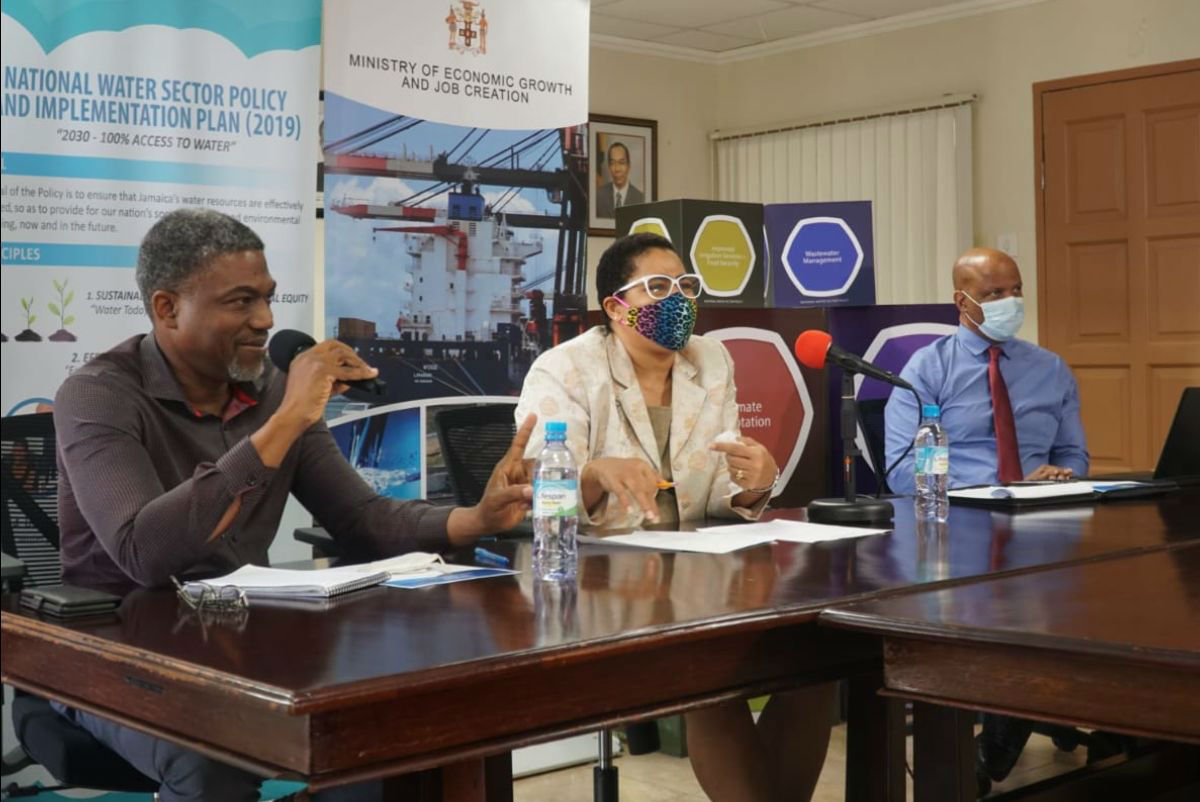
  The Ministry of Economic Growth and Job Creation this morning (Tuesday, Sept 22), hosted a virtual information session on water and health in keeping with the measures outlined in the National Water Sector Policy and Implementation Plan 2019. L-R: Mr Michael Williams, Environmental Health Specialist, Ministry of Health and Wellness; Ms Talia Gibson, Acting Director, Water Policy and Monitoring Branch, MEGJC and; Mr Anthony McKenzie, Director, Environmental Management and Conservation, NEPA.
The Ministry of Economic Growth and Job Creation this morning (Tuesday, September 22) outlined the Standards for Access to Potable Water Supply and Improved Sanitation as stated in the National Water Sector Policy and Implementation Plan 2019 (NWSP).
 
The measure was outlined during a virtual information session held under the theme, Water and Health.
 
Acting Senior Director, Water Policy and Monitoring Branch within the Ministry of Economic Growth and Job Creation (MEGJC), Ms Talia Gibson says the “Policy specifically speaks to Standards for Access to Potable Water Supply and Improved Sanitation and seeks to achieve several service targets”.
 
She explained all households will have access to potable water supply by 2030. This means that the water supply will be: Safe—Potable water will conform to standards set by the Ministry of Health and Wellness (MOHW) and the World Health Organization (WHO); Convenient—Water supply will be delivered to the home, or as close as possible. Water supply should be no more than 500 metres from the home; Of sufficient quantity—Each person will have access to at least 50 litres per day; Reliable— Water supply will be available 24 hours per day, or otherwise on a predictable schedule; and Affordable— Pricing for water will continue to be arrived at by consultation with stakeholders. No one will be denied access to potable water because of an inability to pay. Ms Gibson added that for sanitation “cities and major towns will have sewerage services provided by a utility company. Where sewerage service is not economically feasible, all new developments will have access to safe and environmentally friendly sanitation solutions, which will preserve the privacy and dignity of users. Standards for non-sewerage areas will be established and enforced by the National Building Code, MOHW Regulations, stipulations by the Municipal Corporations and Local Authorities, and National Environment and Planning Agency (NEPA) guidelines”.
 
Presentations were made by Mr Michael Williams, Environmental Health Specialist, Ministry of Health and Wellness and Mr Anthony McKenzie, Director, Environmental Management and Conservation, NEPA.
 
The National Water Sector Policy and Implementation Plan 2019 was tabled in the Houses of Parliament in July 2019. The Policy aims to guide the provision of universal access to potable water and adequate sanitation by 2030. 
 
                                                           –30–
 

Earth Today | White River Fish Sanctuary Ready For Conservation, Ecotourism Boost

WITH THE official opening of office space for the White River Fish Sanctuary in St Ann and now three years in operation, the stage seems set for its enhanced contribution to sustainable fishing and ecotourism.

“What today’s launch of the White River Fish Sanctuary represents is sustainable tourism, where we take a holistic approach to the sector’s current and future economic, social and environmental impacts,” noted Minister of Tourism Ed Bartlett, speaking at the opening on August 13.

“In taking this holistic approach, we are also addressing the needs of visitors, the industry, the environment and communities, and building meaningful public-private sector partnerships,” he added.

“Though I am no marine biologist, the data also highlight that with the establishment of the fish sanctuary, we will see an increase in the population of fish in our waters that will be beneficial for livelihoods and help restore our reefs,” he said further.

The operation of the fish sanctuary has been made possible, in part, through a partnership, valued at some J$15 million, between the Tourism Enhancement Fund and the White River Marine Association (WRMA).

Among other things, the partnership has seen the construction of the new office, together with the employment of fishermen as sanctuary wardens, and the purchase of enforcement and other equipment.

“The main objective of the wardens is to stop all fishing or the taking of any live organisms from within the sanctuary. With this new source of alternative income for the fishermen, we are excited to be supporting the livelihoods of many members of the community until sustainable fishing returns,” noted Kyle Mais, director of the WRMA.

The sanctuary also employs an accounting administrator, a manager, and a marine biologist.

Meanwhile, operations of the sanctuary have also seen five coral nurseries set up since June 2017 to grow 1,400 pieces of staghorn and elkhorn corals as part of a five-phase, five-year programme funded by a grant from the Special Climate Change Adaptation Fund.

Already, more than 700 pieces of coral have been planted, and the nurseries reseeded with the corals which show resilience to the bleaching events.

“These direct and indirect benefits of launching the sanctuary also speak to the rich value chain that tourism offers when linkages are strengthened. What this means is that many people along the value chain will benefit from this project,” the minister said.

“From our reports, there has also been an increase in the number of glass-bottom boats seen within the sanctuary that use the coral nursery as an attraction and also to educate tourists. As is being displayed through this project, tourism can be linked with national poverty-reduction strategies by providing income through job creation and facilitating entrepreneurial development at the local and community levels,” Bartlett said.

“We can also attest to the fact that greater engagement between tourism and local communities can also help protect or revive our natural assets and intangible cultural heritage. As this sanctuary grows and flourishes, so will the community and, ultimately, tourism activities surrounding it,” he added.

Stakeholder Collaboration

Mais has urged collaboration between existing and new stakeholders for the continued work of the sanctuary, particularly given the reality of the COVID-19 pandemic.

“Organisations like the White River Fish Sanctuary are rapidly facing a critical threat from this pandemic, due to funding constraints which risk forcing us to downsize and lay off staff at the precise moment when our work has become vitally important,” he said.

“Responding to the COVID-19 pandemic requires even greater cooperation among government agencies, local and international organisations and the business community, which is at the centre of the White River Fish Sanctuary fundraising mission for public-private cooperation,” he added.


Contract Signed To Improve Water Supply Between Six Miles And Blake Road In Kingston

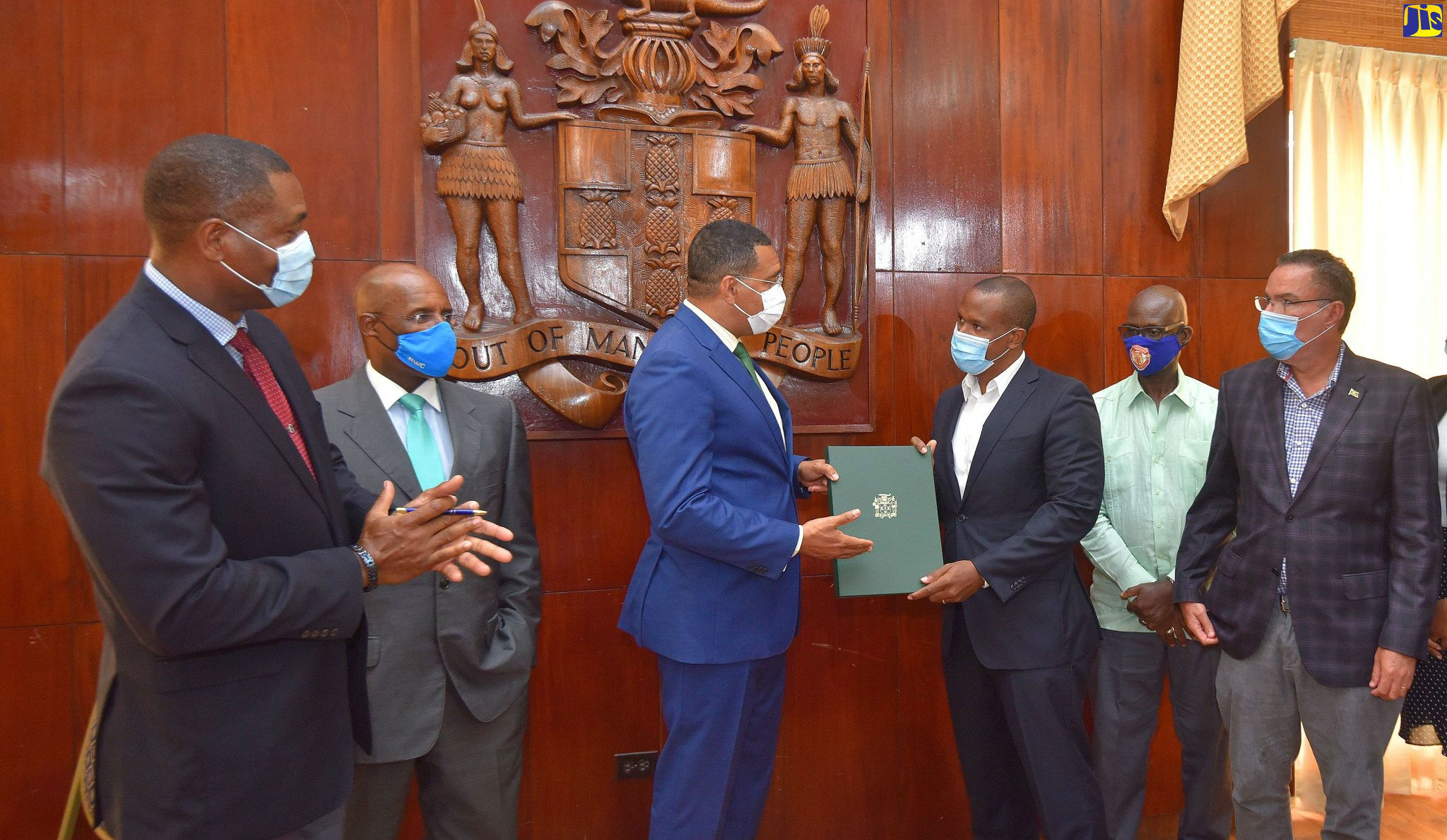
The Government has signed a contract valued at US$25 million for a transmission main upgrade that will improve the water supply between Six Miles and Blake Road in Kingston.

Prime Minister, the Most Hon. Andrew Holness, signed the contract today (August 12), at Jamaica House. Also signing were Minister without Portfolio in the Ministry of Economic Growth and Job Creation, with responsibility for Water and Housing, Hon. Daryl Vaz; and Director, M & M Jamaica Limited, Richard Mullings.

Prior to the contract being signed, the Prime Minister gave a breakdown of the project.

“This project will connect to the pipe that we already laid along the Mandela Highway. It will……..Read More

US$4.8M Climate Resilience Fisheries Project Launched

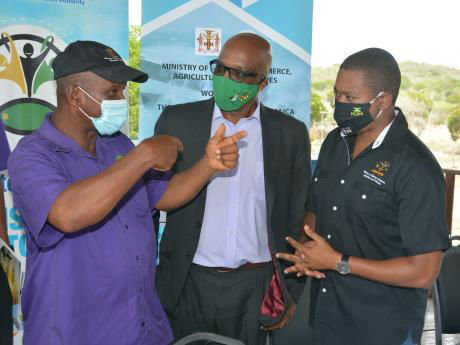
More than 40,000 local fisheries stakeholders are poised to benefit from the implementation of the ‘Promoting Community-based Climate Resilience in the Fisheries Sector Project’ by the Ministry of Industry, Commerce, Agriculture and Fisheries (MICAF).

The US$4.875-million five-year World Bank-funded initiative aims to enhance climate resilient practices among targeted fishing and fish-farming communities across Jamaica in a bid to strengthen the sector through several engagements.

These include investment and diversification in fisheries-based alternatives; development of climate resilient fisheries and aquaculture polices and regulations; building awareness on more climate and disaster resilient fisheries and aquaculture practices; and increased sensitisation of climate change, among other crucial measures, for a sustainable fisheries sector.

The project was launched by Minister without Portfolio Leslie Campbell during a ceremony at the Treasure Beach Sports Park in St Elizabeth, on July 24.

Campbell, who expressed the Government’s appreciation for the World Bank’s ongoing support, reaffirmed the Administration’s commitment to providing the fishing industry with the necessary inputs to ensure its sustainability.

“We recognise the critical and important role being played by the fishing industry in creating livelihoods for fishers throughout the country and the unlimited potential it possesses to significantly contribute to the development of the national economy,” he said.

Campbell noted that over the past two years, the sector contributed US$79 million to Jamaica’s gross domestic product (GDP), with exports totalling more than one tonne, adding that he anticipates “great success” from the project that will further enhance the industry.

For his part, Minister of State in the Ministry of Industry, Commerce, Agriculture and Fisheries, Floyd Green, said he was happy that the initiative will foster greater climate change resilience across the sector.

He pointed out that there is indisputable evidence that climate change is “all around” and as such “nobody has to convince us about [it]”.

“What we have to do is be equipped with the tools to adequately respond so that our fisheries sector can survive.

We want to ensure that for generations to come, we can celebrate a robust fishing industry,” Green added.

Chief Executive Officer of the National Fisheries Authority, Courtney Cole, in his remarks, noted the entity is looking forward to the project’s successful implementation.

NLA receives Cadastral mapping and land registration support

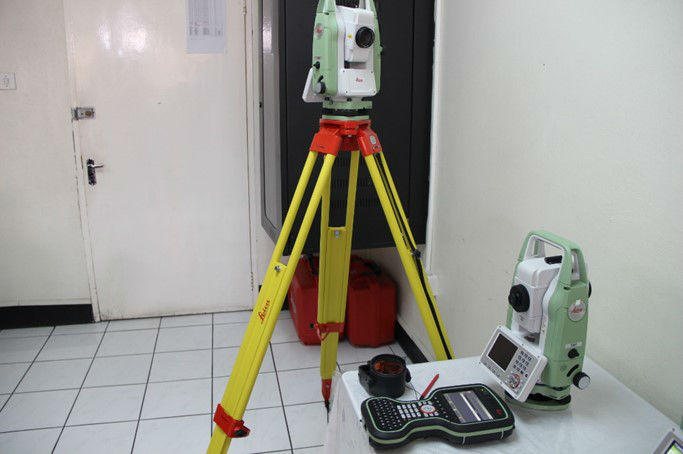
Charge d’ Affaires of the Embassy of the Republic of Korea, Lim Baejin last Thursday, July 16, 2020, handed over several pieces of equipment to the National Land Agency (NLA) to support Cadastral Mapping and land registration across the island.

Minister without portfolio in the Ministry of Economic Growth and Job Creation (MEGJC), Hon. Leslie Campbell who was on hand to receive the items valued at US$92,903.58, expressed his gratitude on behalf of the Government and people of Jamaica.

The items which were handed over at the NLA’s Estate Management Division on North Street, Kingston included three Leica TSO7 Total Stations, three Leica CS20 Field Controllers; and one Leica GS16 GNSS Rover kit as well as the peripheral accessories that were all procured through the Korean International Co-operation Agency (KOICA).

Minister Campbell who has responsibility for Land, Environment and Climate Change at the MEGJC told the Charge d’ Affaires that the equipment represents a much- needed injection of new technology in land surveying in Jamaica.

“It will take Cadastral mapping at the NLA to new levels, generating improved efficiency in land surveying and land registration activities.  I am delighted to know that this will positively impact the delivery of the targeted 20,000 new Certificates of Title by the Government,” he said.

The Chargé d’Affaires, in turn, said the equipment will facilitate post-project management support for the registration of lands in Jamaica.

Minister Campbell added that Jamaica has had a productive partnership over the past eight years in Cadastral mapping with the financial and technical support of the Government of the Republic of Korea through the KOICA.

“Special thanks to the representatives of the Embassy of the Republic of Korea, who worked along with the local team from the Ministry of Foreign Affairs and Foreign Trade, the National Land Agency and the Ministry of Economic Growth and Job Creation to successfully procure and deliver this well-needed equipment. We look forward to the continued cooperation between our two countries,” Minister Campbell said.

The Land Administration and Management Programme (LAMP) was subsumed in the National Land Agency to benefit from synergies and to accelerate land registration in Jamaica. The merger was completed in March 2019.   Systematic land registration is being pursued whereby certain areas will be designated to be surveyed and land adjudication undertaken with a view to having the parcels of land therein registered.

The GOJ has targeted the delivery of 20,000 new Certificates of Title over three years. This activity commencing in 2019. 

–30–