

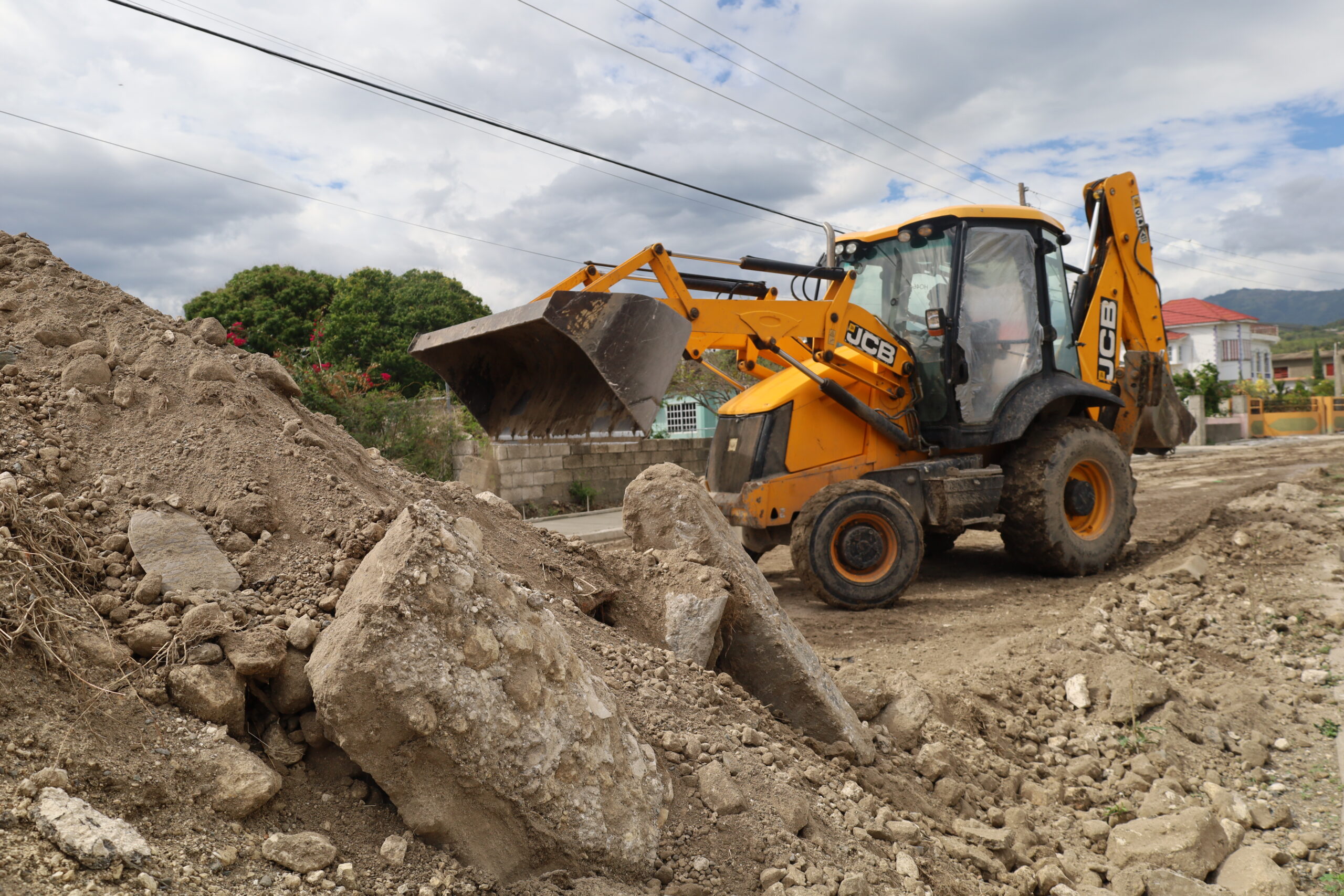
The Government will, over the next two months, undertake a targeted programme of rehabilitation along selected bus routes across the island to improve travel conditions for both public and private transport users.
Approximately J$365 million has been programmed for bus-route works under the Ministry’s 2026/2027 recurrent maintenance programme for secondary roads. The interventions will be implemented across the western, southern, southeastern and northeastern regions and will focus on corridors that are important to the daily movement of commuters, students, workers and goods.
Minister with responsibility for Works, Hon. Robert Nesta Morgan, said the programme is intended to provide practical and visible relief on heavily travelled routes. “Bus routes carry the daily life of our communities. When these roads deteriorate, the impact is felt by bus and taxi operators, passengers, private motorists, businesses and families alike. Over the next two months, we will move deliberately to improve a number of these corridors and make travel safer, smoother and more reliable,” Minister Morgan said.
Among the corridors programmed for attention are:
- Western Jamaica: Shrewsbury Drive; Marldon-Maroon Town; Seaford Town; and Falmouth-Springvale, including Bounty Hall-Wakefield.
- Southern Jamaica: selected Clarendon routes including Freetown to Alley, Foga Road, Chapelton Road and Goshen-Thompson Town,
- Southeastern Jamaica: Guava Ridge-Mavis Bank Square, Lawrence Tavern-Glengoffe, Port Morant-Bath, Morant Bay-Wilmington and selected routes in northwestern St. Catherine.
- Northeastern Jamaica: Bamboo-Brown’s Town, Gayle-Guys Hill, Martins-Islington and selected school and community bus corridors across Portland.
The works will include localised pavement rehabilitation, surface repairs and treatment of failed sections, together with drainage-related improvements where required. The precise treatment will be determined by the condition of each corridor.
The National Works Agency (NWA) will coordinate the implementation of the programme. Works will be sequenced to reduce disruption, and motorists are being asked to observe traffic-management measures and exercise caution in active work zones. The schedule for individual corridors may be adjusted to account for weather, site conditions and other operational requirements.